

National Planning Framework: What it means for farmers and crofters
First being brought into effect on 13 February 2023, the fourth iteration of the National Planning Framework (NPF4) sets out the long-term vision for planning and development in Scotland. Fundamentally, the policy update aims to create balance between concerns over climate change and nature decline and the need for economic growth. As part of this refocus, planning decisions must prioritise the reduction of emissions and enhancing biodiversity through protection of vulnerable habitats and implementation of actions to boost nature. Importantly, the principle of “do no harm” is no longer sufficient.
The shift may, on the surface appear like another set of hurdles for farmers and crofters to jump over, however the new framework is broadly positive for farming and crofting communities, with strong policy support for rural population growth, economic diversification and promoting sustainable rural businesses.
The document clearly sets out that land, including farmland is to be seen and valued as an economic resource, for the production of food and energy, but also as an environmental asset for carbon storage and biodiversity. Because of this, farmers should expect greater scrutiny over proposed land-use changes, especially where it concerns prime agricultural land, peatland and other sensitive habitats.
Whether a farmer or crofter can develop their land or assets will be determined within their Local Development Plan (LDP). The LDP is what makes the NPF4 a reality, taking broad aims and objectives and implementing them on the ground. The LDP sets out where development should and should not happen, allocates land for development and generally actions the NPF4. Where a proposal aligns with the policies within NPF4 and the local LDP, there is strong justification for approval, where it conflicts, refusal or revisions are likely.
The table below sets out some of the documents farmers and crofters may be asked to supply, depending on the scale of their proposed development.
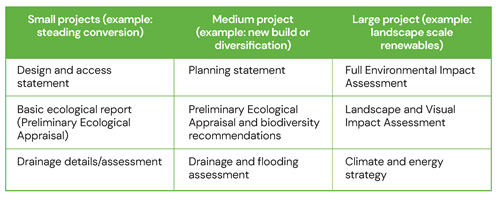
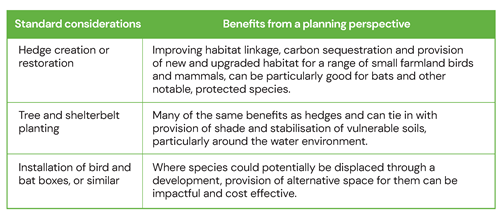
So, for those businesses looking to undertake some form of development, consider what the business may be prepared to do to build biodiversity on the farm or croft. Mitigations and enhancements need not be overly complicated, but they should be well thought out and achievable.
5 top tips
- Assume you will be asked to demonstrate climate change mitigation and biodiversity enhancement in your proposal.
- Prepare early for surveys, particularly ecology work, some surveys can be highly influenced by season.
- Depending on the proposal, actions for biodiversity can be impactful, even if modest.
- Where possible, align your proposal with your Local Development Plan.
- Remember the Good Agricultural and Environmental Condition (GAEC) regulations, particularly retention of landscape features and how the proposal may impact current support payments.
Alexander Pirie, Senior Consultant and Area Manager, [email protected]
Posted by SAC Consulting on 16/06/2026
