

Preventing lamb deaths from drench inhalation
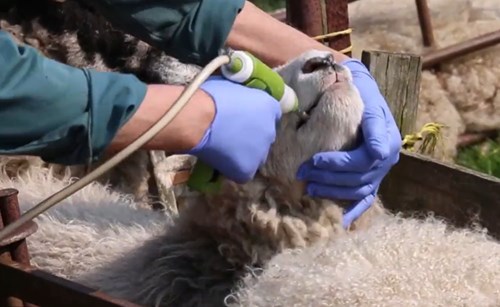
Mineral and anthelminthic drenches are routine treatments used on many farms. If not administered correctly, they can lead to injuries and death. Lamb death caused by mineral drench inhalation was recently diagnosed in our Dumfries postmortem room in May. The diagnosis has become a regular feature of late spring and early summer in recent years.
Usually occurring in six to eight-week-old lambs that are affected following handling for multiple management tasks. These can include administration of anthelmintic and mineral drenches, clostridial and/or orf vaccination, tagging, castration/tailing and application of treatments for tick/fly control. Lambs that inhale mineral drench (or any other liquid) into their lungs can gasp and struggle for breath and die very rapidly within 15 to 30 minutes of being handled. Others will die over the next 24 to 48 hours and losses can run into double figures. Correct drench administration is key to reduce the risk of inhalation occurring.
Administration
Underestimating the weight of animals is common cause of under dosing. Under dosing also increases the risk of anthelminthic resistance. To determine the correct dose, weigh the group and dose for the heaviest. Remember to ensure that the weigh crate is accurate before starting.
It is important to ensure that the anthelminthic or mineral drench is administered correctly. Ensure your drench gun is in good working order, checking to ensure no sharp/burred edges that could damage the mouth. Also ensure the drench gun is calibrated correctly and is delivering the right amount before you start drenching. Drenching guns should be well maintained and replaced regularly.
Drenching with the correct technique is vital. Firstly, ensure that the sheep is adequately restrained and not able to leap around to reduce risk of injury. Insert the nozzle in the corner of the mouth between molars and incisors. The nozzle should be resting over the back of tongue. Do not force the nozzle as tissues at the back of the mouth are easily damaged.
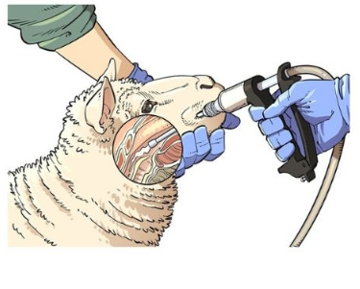
The Drenching Technique (Source: AHDB)
Before administering any routine treatment, it is important to ask the question - is the treatment needed?
Mineral drenches:
Trace elements (copper, cobalt, selenium and iodine) are vital for health and growth. They are all sourced from the ewe’s milk until they are weaned, following this, lambs must get nutrition from their diet.
Input from both your veterinary surgeon and nutritionist will help inform whether supplementation is required. The following testing may be appropriate:
- Establish whether diet is deficient in trace elements. Testing of soil and forage can be performed.
- Blood sampling of lambs prior to supplementing. It is recommended to sample around five animals from each different management groups. This is of particular importance if considering supplementing with copper. If too much copper accumulates in the body copper toxicity can occur. Breeds such as Texels and Suffolks are more susceptible to toxicity whereas breeds such as black face are more susceptible to deficiency.
- If deaths are suspected secondary to trace element deficiency/toxicity liver can be tested for trace elements.
Anthelminthic drenches:
Heavy worm burdens can lead to diarrhoea, reduced growth rates and deaths. Anthelminthic strategies are farm specific and should be discussed with your veterinary surgeon. The following may help to inform a decision on whether treatment is required.
- Nematodirus battus causes deaths in young lambs. Disease is caused by the larval stage of the worm therefore worm egg counts cannot be used to monitor for disease.
- Treatment of other nematode infections should be performed when required using faecal egg counting in conjunction with grazing history, growth rates (regular weight) and any clinical signs suggestive of disease.
If it is established that anthelminthic or mineral drench is required, it is important to ensure it is administered correctly.
5 top tips
- Consider if the treatment is required before administering it.
- Ensure your drench gun is calibrated and in good condition before using.
- Always check that the gun is delivering the right amount before you drench.
- To reduce the risk of injury, ensure animals are adequately restrained and the drench is administered correctly.
- Further information on administrating drenches can be found on the AHDB website.
Useful links
- www.scops.org.uk/internal-parasites/worms/nematodirus-in-lambs
- www.scops.org.uk/forecasts/nematodirus-forecast
- www.ahdb.org.uk/knowledge-library/administering-medicine-livestock
Lynn Gibson, Veterinary Investigation Officer, [email protected]
Posted by SAC Consulting on 16/06/2026
