

Weaning lambs - five key weaning questions answered
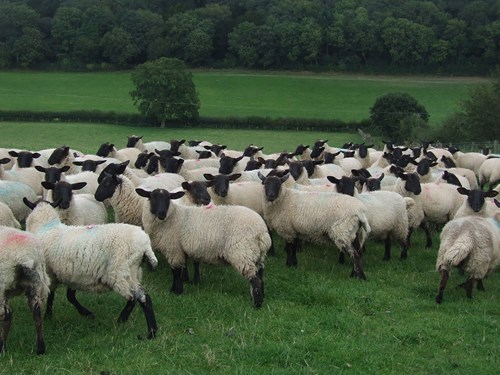
Decisions made at weaning can have a significant impact on lamb growth rates, finishing performance and ewe condition ahead of the next breeding season. It’s not only about getting lambs away but focusing on ewe condition in time for mating, which is highly influential on next year's lamb crop.
When is the best time to wean?
Lambs are typically weaned between 12 and 14 weeks of age (or 70 to 100 days). However, timing depends on the production system, grass availability and ewe condition. If grazing quality or quantity is limited and or ewe condition dropping (reduced by more than 0.5 body condition scoring (BCS) or lamb growth rates are starting to slow down, then it may be necessary to consider weaning earlier.
A good time to review and assess when to wean is around when lambs are eight weeks (56 days) of age. Weighing and body condition scoring at this stage gives a good indication of how ewes have performed throughout lactation.
What is the best method of weaning?
Weaning can result in a period of stress for both ewes are lambs, resulting in potential losses in performance post weaning. Although tempting to try to make the most of having sheep gathered in about and in pens, it is a good idea to limit the number of tasks carried out on the day of weaning to reduce stress and post weaning check i.e. aim to avoid weaning, dosing, and treating for blowfly in the same day.
Also consider placement of ewes and lambs on the night of weaning. Are fences robust? Moving lambs to new pasture, and a change in grass quality requires time for the lambs to adjust. Best practice is to keep the lambs in the same field and move the ewes away.
Also keep a close eye on ewes at drying off for udder deformities that have not been picked up at weaning as this may increase fly strike risk when blowfly numbers are high.
How heavy should lambs be at weaning?
For lowland lambs we are ideally aiming for an eight-week weight of more than 20kg based on an average gain of 250 – 300 grams per day. Assuming gain continues at a similar rate by weaning of above 27kg if weaning at 12 weeks or 31kg at 14 weeks. Hill lambs we would expect to be lighter around 17kg at eight weeks given a small mature weight.
How should I manage ewes post weaning?
The period post weaning before tupping provides flocks with the best opportunity for ewes to adjust body condition if necessary. Ideal body condition at tupping for a lowland ewe is between 3-3.5 and 2.5-3.0 for hill ewes. Prioritise best grazing or supplementation (if necessary) for any ewes below target condition and feed for a gradual gain before tupping.
How should I manage lambs post weaning?
Once lambs have settled post weaning it can be beneficial to split lambs by weight depending on when the finishing target:
- Short keep <30kg
- Medium keep 30 – 35kg
- Long keep > 35kg
Feed efficiency in lambs will drop as the lamb matures resulting in more feed required per kg gain. Optimising gain during this growth stage is a key opportunity to increase margin. Prioritise the best grazing such as silage aftermath, young grass reseed or grass that has been rested to optimise gain post weaning. If weaning is later in the season when grazing quality starts to decrease supplementary feeding on top of grazing may be a suggestion post weaning to help further particularly for any short keep lambs in the system.
Lorna Shaw, Senior Beef and Sheep Nutritionist, [email protected]
Posted by SAC Consulting on 21/07/2026
