

Establishing forage crops: key considerations for success
Establishing forage crops: Key considerations for success
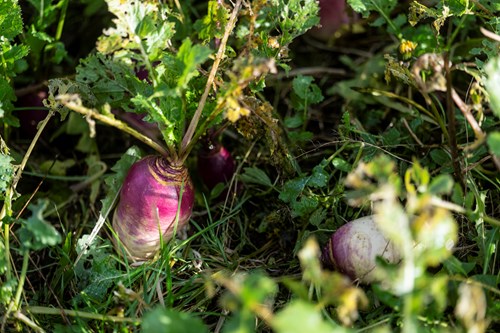
Forage crops e.g. rape, kale and stubble turnips provide livestock farmers with valuable feed for cattle and sheep when grass growth is limited. Successful establishment depends on careful planning, from field selection and soil preparation through to grazing management.
Why grow forage crops?
Forage crops offer an excellent solution to filling the forage gap in the autumn and winter months when grass growth is limited, helping to extend grazing, and reducing winter feed and bedding costs. In addition, they act as a break crop and benefit the ground by increasing organic matter.
Forage crop uses
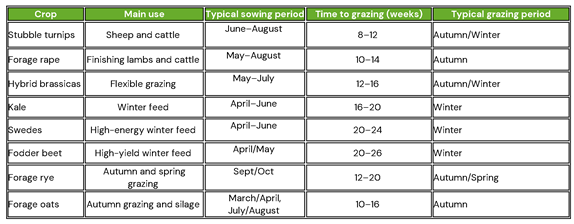
Different forage crops suit different grazing periods. Stubble turnips and forage rape are commonly used for autumn grazing, while kale, swedes and fodder beet are more suitable for winter feeding.
Soil health benefits
Forage crops also make a significant contribution to soil health. Brassicas such as kale, forage rape and turnips develop taproots that help loosen soils, while deeper-rooting species such as forage rye can penetrate compacted layers and improve drainage.
Soil organic matter is improved by crop root biomass and grazing residues; water-holding capacity is also improved, as well as nutrient retention and biological activity. Additional benefits are provided by increasing root diversity and soil biodiversity through the use of multi-species forage mixtures. The grazing of forage crops should be well planned to ensure that soil health benefits are attained. For example, poorly planned grazing may lead to excessive poaching and subsequent damage to soil structure
Selecting the right field
Selecting a suitable field is crucial to the successful use of forage crops. When selecting a field consider:
- Fields with sandy soils, good soil drainage and gentle slopes are preferable.
- Avoid steeply sloping fields or those close to watercourses.
- Ensure there is adequate shelter for livestock and protection from extreme weather.
- Consider where to position a run-back area (a dry area where stock have access to allow for adequate lying time).
- Think about accessibility and water supply.
To minimise disease risks, brassicas should not be continuously grown in the same area. A gap of four to five years (in drier areas) or seven to eight years (in wetter areas) between crops is advised.
Volunteer plants from previous crops and herbicide residues can hinder the establishment of forage crops by creating competition for light and nutrients and impeding germination. Control weeds in the previous crop or apply a pre-emergence herbicide after drilling.
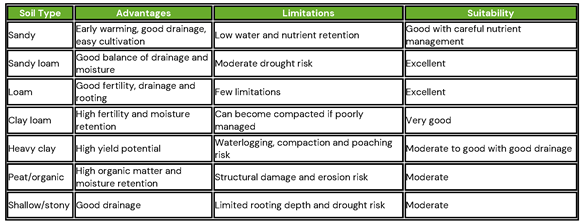
Suitability of different soil types for forage crops
Soil fertility and preparation
Soil testing should be carried out before sowing to assess pH and nutrient status to ensure maximum crop performance Most forage crops perform best at a soil pH of 5.8-6.5. Where required, lime should be applied six to twelve months before establishment.
Nutrient deficiencies should be corrected before sowing. Particular attention should be paid to phosphorus, potassium, magnesium and trace elements as these aid root establishment and moisture uptake and retention. Additionally, sulphur is increasingly important for forage production as it helps with nitrogen utilisation, especially on lighter soils, while boron is essential for root development in brassicas.
The most practical way of applying these nutrients is by using a fertiliser that is appropriate for the conditions i.e. has been chosen based on soil test results and the type of crop to be grown. Some nutrients can be applied via liming or foliar sprays (e.g. magnesium) depending on the soil/crop needs.
Forage crop mixtures
Interest in mixtures of forage crops continues to increase as farmers seek greater resilience and grazing flexibility.
Combining brassicas with cereals, grasses or legumes can improve dietary balance, extend grazing periods and enhance soil health. Brassicas provide highly digestible, energy-rich forage, while cereals and grasses contribute fibre and help maintain rumen function. Mixtures of crops also improve root diversity and resilience to variable weather conditions.
Establishment
Sowing of forage crops should be timed so that crop maturity aligns with the intended grazing period. Soil temperature is important, with many forage crops performing best when temperatures are around 10°C.
Young forage crops are vulnerable to competition from weeds and damage from pests and diseases. They have relatively small root systems and limited leaf area, making them poor competitors with established weeds. In severe weed infestations, weed competition can lead to patchy crop establishment and increased production costs. Common weeds include chickweed, fat hen and volunteer cereals, while common pests include flea beetles, slugs, leatherjackets and aphids.
Effective control relies on an integrated approach that may include stale seedbeds, crop rotation, competitive crop mixtures, targeted herbicide use and maintaining good crop nutrition. It is more effective to intervene early than to have to treat established problems.
Creating a competitive forage crop is one of the most effective long-term weed management strategies. Vigorous crops are better able to suppress emerging weeds by intercepting sunlight and making more efficient use of available soil moisture and nutrients.
Establishment costs
The cost of establishing forage crops varies according to cultivation method, fertiliser requirements, seed choice and machinery use. Typical costs range from approximately £250 to £850 per hectare.
Typical establishment costs
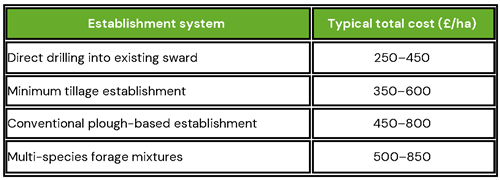
- Seed and fertiliser are typically the largest variable costs and together can account for 40–60% of the total establishment cost.
- Correcting soil pH and nutrient deficiencies before sowing often represents one of the best returns on investment, improving crop establishment and nutrient use efficiency.
- Additional grazing infrastructure, such as temporary fencing and water supply, should also be included when calculating the true cost of forage crop establishment, particularly where crops are intended for strip grazing.
Five top tips for growing success
- Select sheltered, relatively flat fields with light to medium, free draining soils.
- Soil test and seek advice from your local consultant and or agronomist on the best crop types and varieties.
- Remove and control weeds from the previous crop.
- Ensure good crop rotation to avoid clubroot disease in brassica crops.
- Ensure the field offers shelter for the grazing stock.
Kieran Nolan, Consultant, [email protected]
Posted by SAC Consulting on 21/07/2026
