

This year's silage story and what it means for your stock
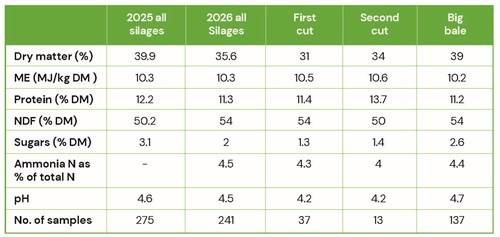
Silage sampling season is in full swing and below is a summary of all the silages which have been analysed so far. These have split into cut and pit/bales. The average figures for all silages analysed at the same period in 2025 are also included for comparison.
Overall silages have analysed lower in dry matter this year, compared to last year with first cuts silages particularly lower on average by 8%. This will influence forage budgets this year as stock will need to eat more due to the higher water content. For example, a 700kg dry cow will eat approximately 10kg of dry matter. If fed 2025 average silage that would equate to 25kg of silage fresh weight, compared to feeding 2026 first cut silage this would equate to 32kg of silage. This 7kg of extra silage per head needs to be factored in when working out the demand vs supply of forage over the housing period.
Despite an increase in fibre content (NDF), metabolisable energy (ME) content is quite similar to last year, however figures range from 9 – 12.1 MJ/kg DM. As the sampling season progresses, we will keep an eye on this as last year there was a noticeable dip in energy. It’s important to have your own silage analysed, the difference between a 9ME and a 10.5ME silage may seem insignificant but feeding a 9ME silage to a 300kg steer would result in a growth rate of 0.6kg/day compared to 1kg/day on a 10.5ME silage. Knowing what your silage quality is allows it to be balanced with other energy sources if needed, like cereals to ensure optimal growth and performance.
Protein is on average lower this year in silages across the country at 11.3%, compared to 12.2% last year. However, second cut silages have shown an improvement averaging 13.7% protein. The lower protein overall is likely reflective of the challenging growing season faced across the country. Early April brought a mixture of rain, cold spells, in the same month the arrival of Storm Dave brought very strong wind, snow and heavy rain to parts of Scotland. Followed by an unprecedented heat wave for much of the UK in late May. This may explain why there has been a dip particularly in first cuts, although again there was a large spread of results ranging from 8.4-16% protein.
If your silage does analyse lower in protein this year, it’s important that the ration is formulated to balance this appropriately. Depending on what type of stock it is being fed to, there may be a need for additional protein sources, or if being fed with straw this will limit the inclusion rate as straw dilutes the protein content of the overall ration.
Lastly, there has been some concerns around high nitrate levels in some silages. This may be caused by either a late application of fertiliser/slurry or silage that was cut during drought conditions. Most nitrates in silage are converted to ammonia, which while you can see from the average ammonia-N figures across the different cuts are sitting well below 10%, there have been a few silages sitting above 10%. While it is currently a relatively small number of silages this is something we will continue to monitor. High nitrate can affect fermentation, particularly when coupled with lower sugar content which has also been lower this year. If your silage is >10% ammonia-N speak to your local consultant or nutritionist to make a plan.
The the key things going into this winter are analyse your silage and plan your feed budget for the winter ahead. Having your silage analysed will ensure rations are appropriately balanced. As shown, no two years are the same, nor are two cuts.
In addition, the implications of the development of what the Met Office are describing as the largest El Niño in living memory. They are forecasting a prolonged wet autumn and winter this could potentially bring the housing period forward and extend it. This coupled with feed market volatility I would really encourage you to get in touch with your local consultant and sit down and plan for the winter to come. Having a forage budget in place will let you see what shortfalls or surplus there may be and plan ahead to buy in what feed stocks are required.
Mary Young, Ruminant Nutritionist, [email protected]
Posted by SAC Consulting on 19/11/2026
