

How improved calving performance is driving herd efficiency
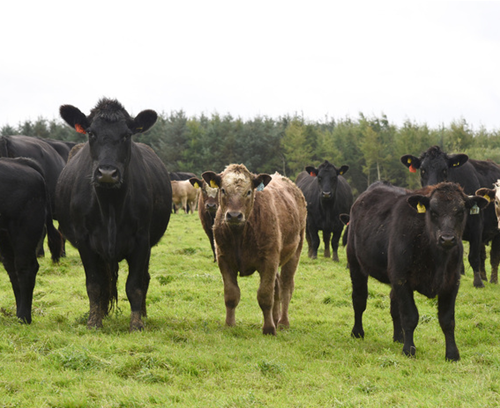
Reproductive performance is one of the most important drivers of efficiency, profitability and environmental sustainability in suckler beef production. Each day that a cow remains unproductive costs money, increases emissions and reduces the overall output of the herd. As a result, there has been growing focus across the Scottish beef sector on improving calving performance and reducing calving intervals.
The importance of reproductive efficiency is reflected in recent policy developments aimed at encouraging better herd performance. However, the real value of improved calving intervals extends far beyond compliance, delivering tangible benefits for both farm businesses and the wider environment.
Changes to the Scottish Suckler Beef Support Scheme (SSBSS)
From 1 January 2025, the Scottish Government introduced a new condition within the SSBSS, requiring calves to be born from cows achieving a calving interval of 410 days or less. The calving interval relates to individual animals and not the herd average. The measure was designed to encourage improved reproductive efficiency and reduce greenhouse gas emissions associated with less productive cows. The 410-day requirement will remain in place for 2027 claims.
Recognising the challenges faced by smaller herds, a derogation was introduced on 1 January 2026 meaning businesses claiming 10 calves or fewer in a scheme year are exempt from the 410-day calving interval requirement.
Evidence of progress
In 2021, the average calving interval within the Scottish suckler herd was around 400 days, with only 84% of cows and heifers achieving a calving interval of 410 days or less. Reproductive efficiency is a key driver of productivity and profitability in suckler systems and has a direct influence on the carbon footprint of beef production. Modelling has shown that reducing calving interval from 400 to 395 days can lower greenhouse gas emissions by 39.2kg CO₂e per cow, demonstrating how relatively small improvements in fertility can deliver both economic and environmental benefits.
A report published by SRUC on the 2025 SSBSS 410-day calving interval insights has highlighted the progress Scottish beef producers are making in improving herd performance. Analysis showed that average calving interval fell from 403 days in 2019 to 391 days in 2025, reflecting a significant improvement in reproductive efficiency across the national herd. A shorter calving interval means fewer days when cows are consuming feed and generating emissions without producing a calf, helping to improve both productivity and environmental performance. Using emissions assumptions per beef cow, the reduction in calving interval is estimated to have reduced excess greenhouse gas emissions by approximately 35,000 tonnes of CO₂e in 2025 compared with 2015.
The report also examined the impact of the 410-day calving interval threshold. Analysis of 2025 claim data identified 32,636 calves, representing 9.7% of validated claims, that did not meet the requirement. However, many were only marginally beyond the threshold, with 10% of failures occurring at 417 days or less and 25% at around 431 days or less. This suggests that while the threshold removes support from some less productive cows, a significant proportion of animals missing out are relatively close to achieving the target.
While the introduction of the 410-day threshold is likely to have encouraged greater focus on fertility and herd performance, the improvements seen in recent years cannot be fully attributed to this factor alone. Strong cull cow prices in 2023 provided an opportunity for many producers to remove underperforming cows from the herd.
The full report is available on the SRUC website.
Full guidance on the Scottish Suckler Beef Support Scheme can be found on the Rural Payments website.
Sarah Balfour, Beef Consultant, [email protected]
Posted by SAC Consulting on 19/10/2026
