

Assessing ewe body condition at weaning
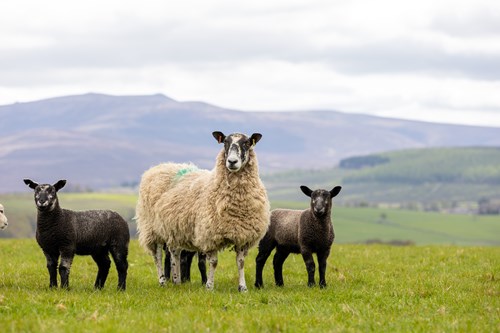
Condition scoring sheep is a simple, effective and cheap management tool for flocks to assess performance. Assessing the body condition score (BCS) of ewes allows you to make management decisions in good time to ensure the ewe is in the optimum condition for the stage of production. An important time to assess ewe body condition is at weaning, to maximise flock performance and profitability.
Checking body condition score, alongside teeth, feet and udders, at weaning rather than waiting until tupping gives farmers sufficient time to make changes and deal with any potential nutritional shortcomings long before breeding.
Target condition scores at weaning are shown below. These are suggested targets and will differ with the range of breeds and flock systems across Scotland.
- Lowland - 3.0 - 3.5
- Upland - 3.0
- Hill - 2.5 - 3.0
When accessing ewe condition at weaning, key groups to look for are:
- Young ewes (particularly hoggs and gimmers)
- Older ewes e.g. ewes in their fifth crop
- Ewes which are multiple-rearing mothers that may have lost considerable condition whilst rearing their lambs
Any poorer condition ewes (particularly those <2.0) should be grouped together to be given preferential treatment. Ideally, they should be given priority grazing. Depending on grass availability and quality, supplementary feeding may be required for these thin ewes to help them regain condition before tupping time. Increasing condition from a 2.0 to a 3.0 by tupping in an upland ewe has been demonstrated to increase the number of lambs weaned by almost 10%.
BCS of ewes should be reassessed again pre tupping after around eight weeks and anything that has failed to increase BCS should be ideally removed pre tupping. It is important to investigate if thin ewes fail to gain weight post weaning for no obvious reason e.g. lameness, broken mouth, or insufficient nutrition available. This may indicate a potential underlying disease issue such as Ovine pulmonary adenocarcinoma (OPA), maedi visna or Johne’s disease.
If you have concerns that ewes are not gaining condition discuss with your farm vet. Together assess whether current worming/fluke strategies are working and decide if investigation for the presence of iceberg diseases in the flock is required.
Ewes which are considered fat at weaning, can simply be put on a maintenance diet. Mobilising excess BCS over a short period of time has potential to do more harm than good so needs to be managed carefully and not within six weeks of breeding.
Five top tips
- Prioritise scoring condition at weaning to allow sufficient time for adjustments to be made before tupping.
- Ewes considered thin at weaning should be given preferential treatment and access to the best quality grazing available.
- Any over conditioned ewes aim to keep maintenance and control loss as this may affect fertility.
- Reassess before tupping, for any ewes that fail to regain condition, further investigation with your vet or nutritionist may be necessary.
- Ewes in the correct condition at tupping are known to have more lambs at scanning, maintenance is key.
For more information on how to body condition score ewes, useful videos can be found at the following links:
- www.fas.scot/downloads/practical-guide-condition-scoring-ewes
- www.fas.scot/downloads/tn702-body-condition-scoring-mature-sheep
- www.youtube.com/watch?v=7Ykk9vkCNBg&t=34s
Quianne Reijnen, Senior Consultant, [email protected]
Posted by SAC Consulting on 21/07/2026
