

Tightening up your calving pattern
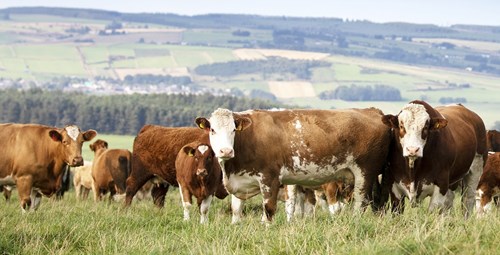
For most spring-calving herds, where cows predominantly calve during February, March and April, chances are that cows will now be settled in calf. Many of you should now be thinking about removing the bull from the cows. With silage and hay making alongside harvest becoming a priority, it is easy for planned dates to slip and for stock bulls to remain with the cows longer than you had intended.
If you have not removed bulls yet then now is the time to do so, to put an end to breeding for this season and a definite end to the calving period next year. A more compact calving will lessen the workload next spring. Late calving cows are always a pain to manage as they are out of sync with the rest of the herd. A cow being bulled on the 15 of August will not calve until the end of May 2027.
There is often a fear associated with taking the stock bull away from cows, thinking there will be a high empty rate. However, if after 12 weeks of breeding there is a high number of cows empty / not settled in calf this will become clear from a high level of activity. Most likely if there are empty cows it may only be one or two which are likely to have either poor fertility or have an underlying condition preventing them from going back in calf which means that if they had run with the bull for another month, they were unlikely to settle in calf.
A compact calving period offers several advantages for suckler herds and is one of the easiest ways of improving your herds efficiency and profitability. A tighter calving pattern results in a more uniform group of calves, making management easier throughout the year. Calves that are of a similar size and age at weaning, are easier managed in terms of feeding, vaccination and marketing. Quite simply, batches of uniform animals are easier handled and dealt with!
Older calves at weaning should achieve heavier weaning weights than calves that are born later in the season. If you are selling weaned calves, this then increases the total weight of animals produced and gives more output/cow which ultimately improves the herd’s overall performance and profitability.
With labour being stretched on farms, having a compact calving period saves on labour by ensuring most cows calve within a short time frame. This makes general supervision, calf management, health treatments and feeding more efficient reducing the time and labour needed to manage the herd throughout the year.
Nutritional requirements and rationing for cows are easier managed with a compact calving period as cows are more likely to be at a similar stage in gestation and lactation compared with an extended calving period. This makes feeding simpler and more cost effective.
The herd’s fertility performance is easier to monitor. Cows that fail to get back in calf within the defined breeding season can be quickly identified and potentially earmarked for culling, helping to improve the herds fertility.
If you are finishing your own calves, earlier-born calves generally finish sooner and more efficiently than later-born calves within groups. This reduces housing, bedding and feed costs and can improve animal performance. Animals being ready to market at similar times are an advantage especially with young bulls who are harder to manage – and can’t be easily mixed with other groups when left behind.
Cows calving within a defined period also means there is more time between calving and the start of the next breeding season. This allows cows time to recover their body condition and return to cycling and bulling, for the bull going in increasing the likelihood of maintaining the ideal 365-day calving interval. Changes to Scottish Sucker Beef Support Scheme (SSBSS, also known as the calf scheme) mean that a calving interval of 410 days or less is now required to receive SSBSS payment (unless you are claiming less than ten calves), so it is hugely important to consider calving intervals
In summary, a compact calving period:
- Produces a more uniform calf crop.
- Increases weaning weights. Calves born earlier are heavier at weaning than those later born calves and there is a smaller weaning check in those bigger calves.
- Reduces labour requirements -less time supervising an extended calving period and management is easier.
- Reduces disease risk – less risk of disease spread from older calves to those younger more vulnerable calves.
- Simplifies feeding – easier and more accurate to ration stock at similar stages of growth, pregnancy and lactation.
- Improves herd fertility – more cows are likely to come into season when the bull is turned out.
- Can reduce finishing costs with finishing cattle are sold earlier.
- Allows more even batches of bigger calves to sell.
- Helps maintain eligibility for the SSBSS scheme.
Lynwen Emslie, Consultant, [email protected]
Posted by SAC Consulting on 17/08/2026
