

Thin ewes after weaning: When should you investigate further?
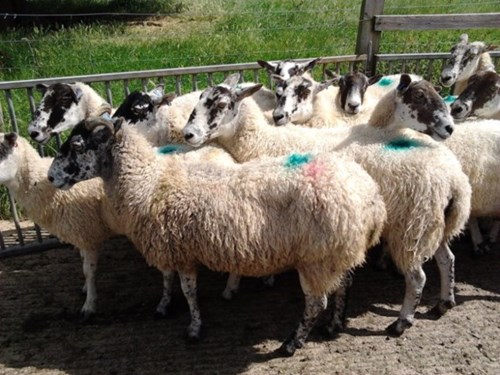
Thin ewes are commonly separated at weaning, to be grazed on better grass. Their condition should be assessed over the next six to eight weeks, and most should improve during this time. It is possible for thin ewes to increase body condition by a whole score in eight weeks. This is equivalent to a liveweight gain of between 100g and 150g/day and is conditional on them being provided with good quality grass with a minimum sward height of 4cm.
Ewes that fail to gain weight for no obvious reason may be suffering from an underlying disease issue and can be useful to help identify the presence (or absence) of iceberg diseases in a flock.
What is an iceberg disease?
The term iceberg disease is used because for every noticeably affected sheep there are likely to be many more sub clinically affected. The disease can cause a non-obvious reduction in production. Therefore, the visibly affected sheep act as beacons and are the ‘tip of the iceberg’.
If you don’t look for these diseases the prevalence can build up – often unnoticed - until a large proportion of the flock are affected. The potential for disastrous consequences on flock health and production can be avoided with early investigation and intervention.
The diseases
Table 1 displays the main diseases considered to have a typical iceberg presentation within a flock.
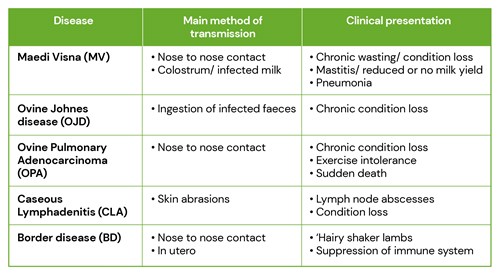
Table 1: Iceberg diseases
The impact of these diseases includes:
- Poor condition
- Increased replacement rates
- Low milk yields
- Reduced daily liveweight gain
The associated cost to a flock affected by iceberg diseases is substantial.
Identifying the tip of the iceberg
Chronic condition loss is a common presentation of these diseases, but not all thin ewes will have an iceberg disease. The euthanasia and postmortem examination of a batch of two to four thin ewes that are not fit for sale is a cost-effective way of screening for conditions such as OPA, MV and Johnes disease. Typical ewes with no obvious reason for poor body condition (e.g. chronic lameness, broken mouth) should be selected and may be transported live to a postmortem facility if they are fit to travel.
Please get in touch with SRUC Vet Services if you would like to discuss the investigation of thin ewes.
Costs of investigating
Once you have selected the appropriate thin ewes, discuss with your vet what testing to do.
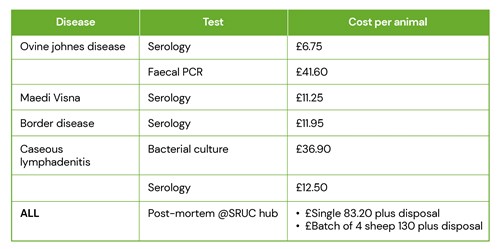
Table 2: Iceberg disease tests (Prices correct as of October 2026)
OPA does not feature in table 2 as detectable antibodies are not produced in response to OPA infection. The only way to definitively diagnose OPA is to collect lung tissue. If a diagnosis is made in a flock, ultrasound scanning of lungs is a great monitoring tool.
Postmortem examination (PME) at an SRUC hub is unrivalled in terms of information gained and value for money as any additional testing is included in the PM cost. PMEs will identify iceberg diseases as well as providing further information e.g. the presence or absence of liver fluke which can be fed into the flock health plan.
The selected thin ewes are not likely to have significant cull value, but their PME can positively impact the health and productivity of the flock. The absence of infectious disease is also a very useful outcome from PMEs.
Now I know my flock status, what now?
Depending on the disease status, continued monitoring and culling where appropriate should reduce spread of disease throughout the flock. In general, with iceberg diseases older stock is the most likely to be infectious and younger stock most susceptible so keeping them apart, particularly when housed is important.
If you currently have no evidence of diseases in your flock, take action to ensure diseases don’t gain entry. Discuss quarantine procedures with your vet and buy from accredited sources where possible.
Megan Fergusson, SRUC Veterinary Investigation Officer, [email protected]
Posted by SAC Consulting on 19/10/2026
