

Suckler herd fertility: The foundation of a profitable beef enterprise
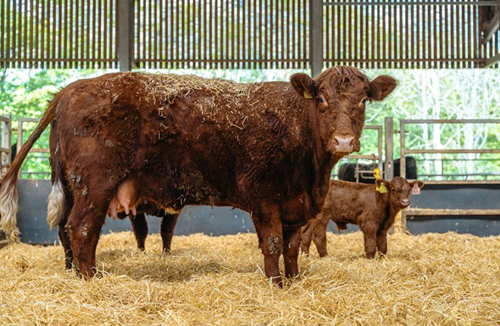
Boosting herd fertility and achieving a tighter calving interval can have a major impact on the productivity and profitability of your suckler herd. With the new Scottish Suckler Beef Support Scheme (SSBSS) requirement for a 410-day calving interval, now is the time to focus on the practical steps that can make a real difference on farm.
Scotland’s Farm Advisory Service (FAS) have recently held a series of on-farm meetings facilitated by SAC Consulting across the Argyll, Aberdeen, Inverness and Wester Ross regions, focused on calving efficiency, bringing together farmers, crofters and industry experts to discuss suckler herd fertility and the importance of achieving a tighter calving interval. A key focus for the meetings was the challenges that suckler producers face during the breeding season including how to improve calving intervals to hit the new Scottish Suckler Beef Support Scheme (SSBSS) requirements of a 410-day calving interval. These meetings provided an opportunity to discuss the key factors influencing cow and heifer fertility, and share practical, cost-effective management tips to help cows get back in calf sooner and more consistently.
Why fertility matters
Every cow that fails to produce a calf represents a major cost. The cow still consumes feed, occupies housing or grazing space and requires labour, but produces no saleable calf. For this reason, reproductive performance can have a greater effect on suckler herd profitability. Improving fertility can increase output without necessarily requiring a corresponding increase in cow numbers.
A compact calving period also creates management advantages. Calves are more uniform in age and size, making them easier to manage, vaccinate and market. Cows can be managed as a more consistent group, while labour requirements can be concentrated around a predictable calving period.
Body condition score and nutrition are critical
Cow body condition and nutrition pre and post calving have a major influence on suckler herd fertility. Farmers were encouraged to monitor body condition throughout the year rather than only immediately before breeding. This allows adjustments to be made before cows become too thin or too fat.
Cows that are excessively thin at calving may struggle to return to oestrus quickly and excessively fat cows can experience increased calving difficulties. Calving difficulty can have significant consequences for fertility. Difficult or assisted births can increase the risk of uterine damage, infections and delayed recovery and therefore a delay in returning to oestrus.
A key message was to pay particular attention to first-calving heifers as they are still growing while also producing a calf and therefore have greater nutritional demands than mature cows.
The meetings encouraged a whole farm approach to fertility, considering fertility as part of the entire production system alongside using herd records to support management decisions.
Measure and record what matters
Good fertility management depends on accurate records. Attendees were introduced to ScotEID’s MyHerdStats, demonstrating how available herd data can be used to monitor performance. The demonstration showed the value of having accurate information on herd fertility and calving performance.
Key things to measure and monitor include:
- Number of cows exposed to the bull
- Number of cows pregnant
- Number of cows calving
- Assisted births
- Abortions and reproductive disorders
- Calf mortality
- Calving interval
- Age at first calving
- Percentage of cows calving in the first three weeks
- Number of calves weaned per cow exposed.
These figures allow producers to identify trends allowing farmers make more informed decisions about individual animals and the herd.
Suckler herd fertility is fundamental to efficient beef production. Ultimately, the most profitable suckler cow is not necessarily the biggest or fastest-growing animal. She is the cow that calves regularly, rears a healthy calf efficiently, maintains herself under the farm's conditions and gets back in calf again.
Five top tips
- Monitor body condition regularly - pay close attention to heifers.
- Maintain an effective preventative health programme.
- Use herd records and data to understand fertility performance and monitor progress.
- Set realistic herd targets and review performance from year to year.
- Consider fertility as part of the entire production system.
Laura MacGregor, Agricultural Consultant, [email protected]
Posted by SAC Consulting on 21/09/2026
