

Optimise silage quality for beef and sheep this season
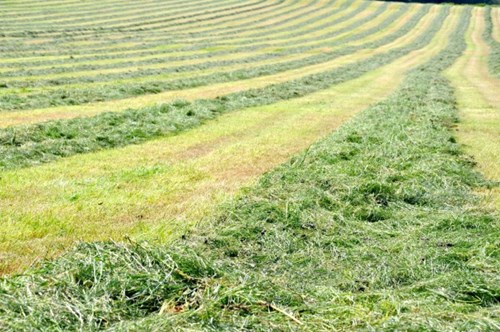
The aim of any winter-feeding system is to fill the winter feed deficit and be as low cost as possible, whilst meeting the nutritional requirements of stock. The winter months can be expensive for livestock systems reliant on purchasing concentrates or other sources of forage. It is crucial to plan and think ahead for this winter as decisions made now are highly likely to influence the success of this year’s silage season and ultimately the quality and quantity of preserved forages available to beef and sheep farms.
There are many variables including the weather, cutting stage and the availability of contractors which affect silage quality. Some of these are out with our control, however, there many decisions we can control. If you have not already done so, now is the time to think about how best to make the most of what you have available.
Forage budget
A good place to start before deciding to shut off silage or hay ground is to consider the on-farm feed demand for winter against potential supply (dry matter availability and quality). Taking the time to consider if the winter-feeding demand is being met will help to reduce the reliance of bought in feed. With no two years the same, feed budgeting is an essential task to check if forage available on farm is going to meet livestock demands throughout winter.
Number/maturity of cuts
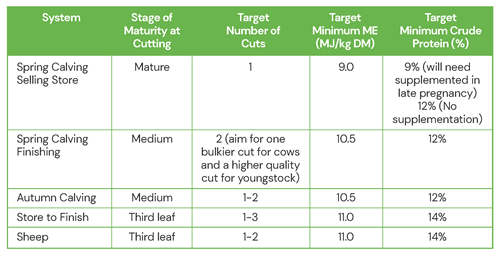
The number of cuts made is linked to livestock requirements, location, and the land available for silage and or hay. Multi-cut systems are more associated with high performance dairy systems or intensive beef systems seeking high protein and energy compared to more traditional systems of two and or three cuts for extensive systems.
The below table highlights key things to consider regarding crop maturity and the number of cuts to consider alongside target forage quality depending on farming system.
Locations of bales/cut in pit
Thinking about where bales will be stored over winter and how stock will be fed will help massively come feed-out. For example, if you are a spring calving suckler system wintering calves as forward stores, taking two cuts, it may be beneficial to keep a more mature, bulkier cut that is less likely to have a high a nutritional value near where the cows are housed, and a less mature better-quality cut nearer calves. In outwintering systems planning ahead to keep bales close to where stock will be wintered will reduce traffic and potential double handling come feed-out when ground conditions may be difficult also.
Record keeping
Labelling bales and bale stacks alongside having an accurate count of the number of bales or tonnes in the pit can go a long way in winter to improving accuracy of feed planning.
Additives
An additive can be a good tool to aid preservation but won’t improve poor-quality forage. The aim should be to ensure that the timing of cut, stage of maturity, time and quality of wilting and pitting/baling is all well managed to optimise forage quality for your system. Consideration should also be given to which additive best suits the silage quality, with the most appropriate additive depending on dry matter (high or low), forage type, and potential fermentation challenges.
Lorna Shaw, Ruminant Nutritionist, [email protected]
Posted by SAC Consulting on 18/05/2026
