

Why you should use Estimated Breeding Values to select your rams
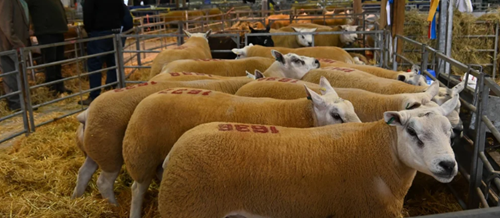
What is an Estimated Breeding Value (EBV)?
Livestock performance is dictated by factors which can be placed in two categories:
- Genetics
- Environmental (management)
An EBV estimates the genetic potential of an animal in a specific trait. Put simply, an EBV assigns values to animals to predict differences in the performance of their offspring. An animal might not reach its genetic potential if we don’t get the environmental factors correct. The environment in which a sheep is reared (its management) can change throughout its life. But its genetic don’t.
Sheep producers spend a lot of time trying to get the management of their flock correct. But many farmers still select rams by eye based on appearance. While it is important that a ram is structurally sound and healthy. Farmers should focus on a selection of specific traits using EBVs which they deem as important to the role of that ram and the flock’s objectives.
What traits are measured in an EBV?
EBV’s estimate a variety of traits based on physical information collected by breeders on the animal itself and known relatives. EBV’s are expressed in the same units as the recorded trait. For example, for the eight-week weight it is expressed in kgs. Each Ram also has an accuracy value next to each trait (the more evidence and data available to show a ram’s performance the higher the accuracy value. In addition, EBVs have a baseline of zero, which represents the breed average. So, if the EBV is 0 this means that the ram is average in that trait, a positive value is above average and a negative value is below average. Although a negative EBV in an area may be desirable for your flock aims.
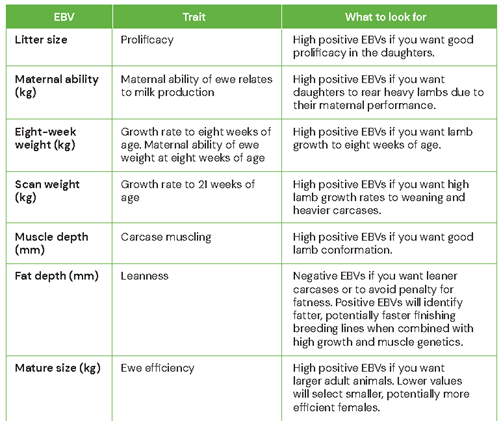
Table 1 – An example of some commonly measured EBVs (Source: Signet, QMS)
Using EBVs and breeding charts
A common way to see EBVs presented is in a breeding chart. This is a graphic produced to make it easier for buyers to interpret a rams EBV. Below in Figure 1, the breeding chart of two different rams is presented to allow us to compare two different rams based on their EBV.
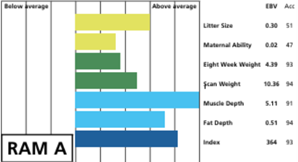
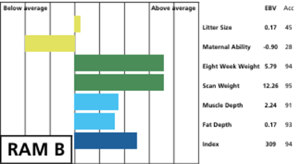
Figure 1 - Ram breeding chart (source: QMS)
Both above rams have good potential, with the majority of the bars being on the right side of the baseline. Ram A would make the better ‘all round ram’ and the better choice for breeding replacements as it has higher litter size, maternal ability. However, Ram B would make the better choice for a terminal sire as he has higher eight week and scan weight.
EBV based selection vs appearance-based selection
Natural selection and human breeding selection has produced pretty good genetic gain in livestock. For example, the average British Holstein cow yields 4,500kg of milk more than once in the 1980s through a combination of better management and genetics.
However, by incorporating the use of EBVs along with an appearance can significantly improve your results. Research conducted by Edinburgh University on the effect of different Ram selection methods on the progeny of the rams found that the system which used EBV’s produced 1.25 to 1.31 times more genetic gain. A similar study on Suffolk sheep, where researchers selected for lean growth traits, for nine years. Concluded that the progeny of sheep under this selection pressure were 4.88kg heavier, had 1.1mm less fat depth and 2.88mm more muscle depth when compared with a control group not under selection for lean growth.
Useful links
- www.fas.scot/downloads/using-estimated-breeding-values-in-sheep
- www.qmscotland.co.uk/wp-content/uploads/2026/04/sheep_ebv_guide_2019.pdf
- www.signetdata.com/technical/ebvs-for-commercial-flocks/interpreting-ebvs-and-indexes
James Orr, Agricultural Consultant, [email protected]
Posted by SAC Consulting on 21/09/2026
