

Weighing up spring crop options
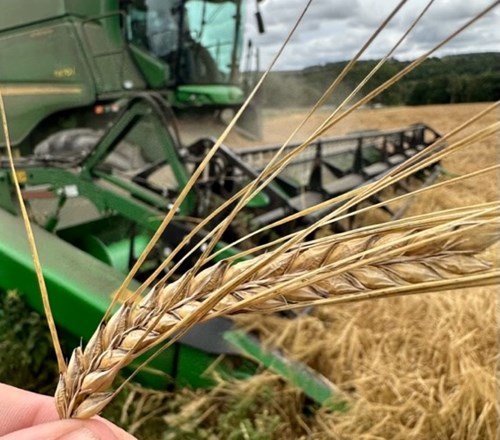
Harvest for 2026, is almost at an end with only isolated pockets and parts of the far north and isles still to finish. Focus is now turning to spring cropping for 2027. Although cereal prices in 2026 have been favourable compared with the lows seen in 2025, concerns over malting contract availability remain in the coming year as barley use for brewing/malting/distilling was 19% lower in July 2026 compared to July 2025. For growers, the malting premium has been crucial to farm finances, with its uncertainty raising the question; “What crop can be grown as an alternative to malting spring barley?”.
Feed spring barley
Growing spring barley for the feed market is an alternative to malting crops. It is common for rejected barley grown for malting to end up in the feed market, however, these crops can often have a lower yield and lower quality, as they were originally destined for a market with different requirements.
Gowing barley directly for the feed market can change treatment of the crop from sowing, with optimum choice of variety, seed rate and fertiliser applications through the season allowing for improved feed quality and increased yields. At the time of writing, Scottish feed barley (ex-farm) is trading at £168 per tonne, according to AHDB market data (8 October 2026).
Spring oats
Oats are often grown as a break crop, with minimal inputs and relatively high tolerance to pH levels making them a low-cost staple in traditional rotations. In recent years, oats have been labelled a “superfood” due to their nutritional profile, increasing consumer demand, and therefore contract availability. Growing costs and yields of milling spring oats are similar to feed spring barley. Feed oats (ex-farm) are trading at £157 per tonne, with milling oats seeing an uplift to £188 per tonne, according to AHDB market data (8 October 2026).
Spring beans
Spring beans are becoming increasingly popular in Scotland, especially in mixed systems where farmers are looking to reduce their reliance on bought in protein. A key benefit of beans is that they are a source of relatively high protein feed for livestock feeding however carry a higher risk of late harvest. In arable rotation, legumes provide an added benefit of fixing atmospheric nitrogen to soils, which can be beneficial to the following crop.
Considerations on growing spring beans include:
- Sowing date - late February to mid-March is best, with later sowing dates linked to reduced yield and late harvest.
- Variety type – early varieties can help bring harvest forward.
- Rotation - beans can be more susceptible to disease than cereals, a one in five-year (legume) rotation is recommended with oilseed rape to be avoided in the prior two years due to sclerotinia risk.
- Weed control – there is only one approved post emergence herbicide, so pre-emergence application is important. Fields should be rolled post sowing to improve pre-emergence weed control.
- Pest control - birds, black bean aphid, pea and bean weevil are all a risk to bean crops.
- Harvest – variables such as sowing date, weather and farm site can affect sowing date, ranging from early September to the end of October and potentially later.
Yields of beans range from 4-5t/ha, trading at £250 per tonne (September 2026).
Spring peas
Similarly to beans, peas have also become popular with livestock farmers as an alternative source of protein and in arable rotation due to nitrogen fixing abilities. Considerations are very similar to beans as both crops are within the legume family.
Sowing dates should range from mid-March to early April; early sowing can cause damping off (a soilborne fungal disease-causing plants to fail to emerge or rot of pea seedling at the soil line enhanced by cool damp conditions) and reduced plant numbers. Optimal rotation of peas in rotation is one in four years maximum.
Yields of peas range from 3.5-4.5t/ha, trading at £200-225 per tonne (September 2026).
Vining peas SLDTs are available in Scotland also, however, areas are restricted to central Scotland as they are required to be within traveling distance to processing facilities.
Other crops
Other spring crops are also grown in Scotland including Linseed and Spring Oilseed Rape however tend to be quite niche, with contracts linked to farm area, local use and requirement.
Grassland
Including short grass leys in an arable rotation has many benefits to soils on farm, including improved soil structure, increasing organic matter and soil fertility. The financial success of this with vary greatly across Scotland depending on local grass let values and infrastructure in place. However, grass lets (for grazing and forage production) have been increasingly scarce due to dry summers seen in Scotland and in areas of England.
There may be scope for an Ecological Focus Area (EFA) Fallow or Herb & Legume grass mixtures to be established on farm to help meet the increased 7% requirement over arable land.
Establishment costs of short-term grass leys should be investigated thoroughly prior to changing practice to ensure costs can be covered by let value and/or other benefits.
Top tips
- Complete a gross margin for spring barley on your farm, considering your own costs and expected yields, so that you have an indication of where prices need to be to turn a profit.
- Before growing an alternative ask yourself some key questions including - is there a market, can it be accessed and what specifications must be met.
- Consider where crops will fit on your farm, and what other benefits can you get from the alternative.
Useful links
- www.fas.scot/article/field-beans-uses-and-market-outlook
- www.sruc.ac.uk/all-sac-consulting-news-posts/malting-spring-barley-what-s-the-alternative
If you would like to discuss cropping plans for 2027, please contact your local SAC Consulting office.
Kirsten Craig, Consultant, [email protected]
Posted by SAC Consulting on 16/10/2026
