

Preparing autumn weed control for 2027 and beyond
Several key herbicides used in winter cereal production could face an uncertain future over the next few years, potentially requiring growers to rethink their autumn weed control strategies.
One of the drivers behind this change is the proposed EU-UK dynamic alignment agreement which, if implemented, could see Scotland and the wider UK move closer to EU pesticide approval decisions.
While establishing winter cereals for harvest 2027, most will have a pre-emergent weed control program ready to go in the chemical store, if in the unfortunate situation where blackgrass is an issue there will likely be pre and post emergent herbicides ready to go.
It is worth noting that the normal, well-established, go to program will likely have significant changes forced on it due to EU-UK dynamic alignment. Whether this is for autumn 2027 or a phased approach over the next few years is still unknown.
Under dynamic alignment the following herbicide chemistry could be removed:
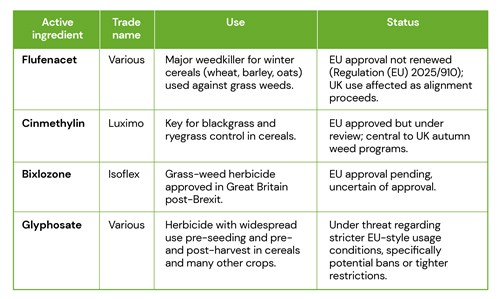
Table 1: Figures based on Farmers Weekly reporting corroborated by the CropLife UK-commissioned analysis, CropLife UK)
For an illustration of the scale of use of flufenacet products in Scotland a government survey in 2024 found the following areas of winter wheat and winter barley were treated:
- Winter barley: Diflufenican/Flufenacet (15,798ha), Pendimethalin/ picolinafen (9,113ha)
- Winter wheat: Diflufenican/Flufenacet (30,772ha), Fluroxypyr (20,995ha)
The removal of Flufenacet means products such as the following:
- Liberator from Bayer
- Generics Clayton Aspect XL, Ambush from Albaugh UK, plus others
- Crystal and Quirinus from BASF
- Plus generics
- Artist
- Cadou Met
- Plus generics
- Adama Chrome
Will no longer be on the market for use as an effective start to winter cereal weed control.
For autumn 2027, herbicide programs using alternatives to the tried and tested Liberator type product plus a pendimethalin product should be at least trialled on a small area of crop.
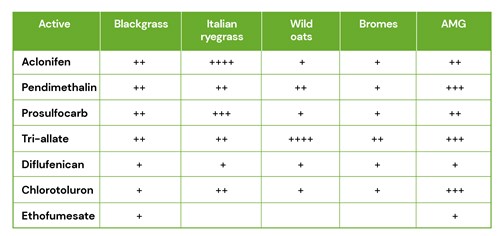
Options to trial will include mixes of the following actives:
Relative strengths of residuals on grass weeds (check crop specificity)
Speak to agronomists early to discuss the best options for known weed spectrums. The main limitation is that pre-emergence performance depends heavily on good seedbeds, adequate soil moisture, correct drilling depth and timely application, ideally soon after drilling. Pre-emergence weed control in winter cereals generally offers several advantages over relying on post-emergence herbicides:
- Weeds are controlled before or soon after germination, protecting crop establishment, tillering, nutrients, moisture and light.
- Better grassweed control. It is especially important for difficult weeds such as black-grass, Italian ryegrass and bromes, which become harder to kill once established.
- Pre-emergence herbicides often provide different modes of action and reduce reliance on resistance-prone post-emergence chemistry. This is particularly valuable where target-site resistance is widespread.
- Autumn post-emergence spraying can be delayed by wet soils, wind or poor travelling conditions. A pre-emergence application secures some control before those risks increase.
In practice, for the strongest programme, consider cultivation type (plough v reduced tillage), known weed spectrum, then build a herbicide programme based on a pre-emergence foundation followed by monitoring and a targeted follow-up where necessary. To be effective with the chosen products, the applications must follow the current label guidance.
Neil Melville, Senior Consultant, [email protected]
Posted by SAC Consulting on 16/10/2026
