

Think ticks this late summer
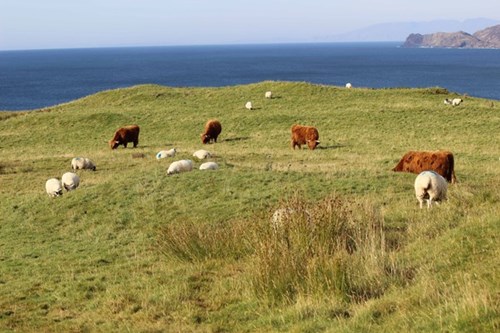
As many of you will be in the process of weaning lambs and starting to think about tupping, or moving cattle onto silage aftermaths, ticks may not be top of your list of considerations, but the coming weeks and months often see a peak in tick-borne diseases in livestock.
The highest proportion of ixodes ricinus sheep/deer ticks are seen between May and July, but in some areas with the right temperature and humidity, they can be present all year round. Symptoms of tick-borne diseases are usually seen a few weeks after a tick bite from an infected tick, with the time ticks take to get a blood meal varying by life-stage, so you may not always find the tick(s) on the affected animal.
Tick-borne diseases found in Scottish livestock
There are three key tick-borne diseases affecting sheep:
Tick borne fever (TBF)
Caused by the bacterium, anaplasma phagocytophilum, affected animals can experience immune suppression increasing the risk of secondary infections, high fever, poor appetite, milk drop, abortion, and temporary infertility. Cattle can also be affected with TBF.
Tick pyaemia
Pre-weaned lambs (2 – 12 weeks old) affected by tick pyaemia show signs of lameness or paralysis, after the bacterium staphylococcus aureus, enters the bloodstream and produces abscesses in the tendons, joints, spine, and brain.
Louping ill
Sheep affected by louping ill, caused by a virus, show neurological signs including hyperreactivity, recumbency, seizures and sudden death. Young lambs are usually protected from louping ill by colostral antibodies in endemic areas but are at risk if there is a failure of passive transfer of immunity and when colostral antibodies wane as the lamb gets older. There is currently no commercially available louping ill vaccine on the market, but Moredun are crowdfunding to change this.
Ticks can also spread the protozoa, babesia divergens, to cattle resulting in babesiosis, also known as redwater, due to the production of dark pigmented urine in affected animals. Other clinical signs include depression, high fever, respiratory distress, diarrhoea, and death. Calves under one year old appear to be resistant to babesiosis.
Co-infections with more than one tick-borne disease have been recorded and these cases can be associated with higher morbidity.
An increasingly nationwide problem
Traditionally, the greatest risk of tick-borne disease was in upland rough grazing or moorland areas in western Scotland, but tick-borne diseases have been recorded in almost all regions of Scotland in recent years. This has been driven by host availability, and of particular interest is the growing number of deer in some locations. However, sheep can maintain tick populations in the absence of wildlife.
Additionally, changing land use from agri-environment schemes, ecological focus areas and forestry expansion has created more suitable tick habitats. Tick distribution varies across fields, but they tend to be concentrated at woodland edges, pasture margins, water margins and near areas of bracken. Climate change is also altering tick distribution due to changing temperature and rainfall levels.
Tick-borne diseases may be introduced to new areas following the purchase or movement of stock.
Managing the risk
As ticks tend to spend most of their life cycle off the host in thick, damp vegetation, control can be difficult. Long-term pasture improvement, drainage, scrub clearance, and deer fencing can be used, but this may conflict with the aims of some agri-environment schemes. Welfare and economic trade-offs also exist between grazing the high-risk areas and the provision of food, shelter, and shade.
To balance this, high-risk stock (naïve animals that have either been bought from non-tick areas and pre-weaned lambs or calves) should avoid grazing high-risk pasture when tick levels are expected to be highest in the spring and autumn. Exposing stock to a low-level tick challenge pre-breeding should help build immunity. It is then essential to ensure exposure is maintained to retain this immunity in older stock.
Five top tips
- When handling livestock for other management tasks, check for ticks. Key areas are on skin folds between the chest and front legs in the groin around the udder or scrotum.
- Complete a risk assessment of your grazing areas to plan your grazing rotation for high-risk animals at key times of the year.
- At the autumn sales, ask vendors what the tick history of their farm and whether the stock being sold has been tick exposed or not.
- Speak to your local farm vet about tick-borne diseases and their treatment and integrate this into your health plan.
- Don’t forget to check the farm dog or yourself for ticks! Dogs and humans can also be affected by tick-borne diseases.
Laura Henderson, Consultant, [email protected]
Posted by SAC Consulting on 21/07/2026
