

Store lambs: To sell or not to sell?
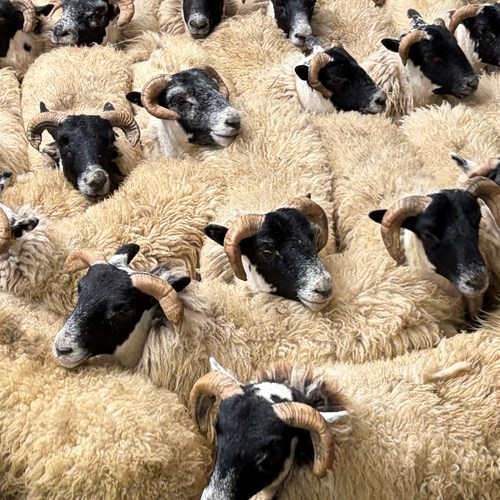
It’s that time of year again when grass growth begins to tail off, day length shortens and there is a debate on whether to sell lambs as stores, or to feed them and finish them.
Whether to keep or retain lambs should be a flexible decision based on the resources available on the farm, such as cash flow, grass, forage, feed, labour and shed space. This will change from year to year.
For some farms this may be an obvious decision whether to retain or sell store lambs, however it should be a flexible decision based on available resources on farm e.g. feed and forage, cash flow, labour and shed space. It does not have to be one decision; some can be sold now; some can be retained and finished or sold later.
Whether you are buying lambs in or finishing homebred lambs, consideration must be given to the lamb type, finishing system, and preferred keep length. As a guide, lambs are classed as:
- Long keep (below 30kg, on farm 12 weeks+),
- Medium keep (30-35kg, on farm 6-12 weeks),
- Short keep (35kg+, on farm less than 6 weeks).
The decision whether to keep or sell lambs will likely change from year to year depending on resources and market demands. Ensuring you have lambs most suited to your available resources is vital. This should be a flexible decision, just because you did something last year, does not mean it will suit conditions this year. For example:
- Short keep lambs may be trading well, therefore selling these may make financial sense, and will free up grass for medium keep lambs.
- Grass availability on farm may be high at the end of summer, so short keep lambs are a favourable purchase to finish quickly on forage.
- You may have surplus homegrown concentrates, allowing for additional lambs to be finished, compared to previous years.
- Long keep lambs may be trading at low pp/kg making them a favourable option to buy and finish.
- You may not have grazing or shed availability to finish Long keep lambs, therefore selling them allows resources to focus on medium keep lambs.
Before deciding, you should know how many lambs you plan to keep, when you plan to finish them and what you plan to feed them.
A partial budget is one way to compare the margins between selling lambs as stores or finishing them.
An example of finishing long keep lambs on swedes is included below:
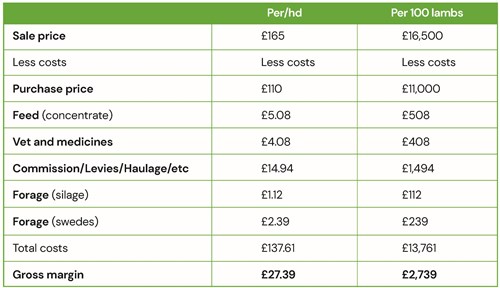
This simple budget does not include an allowance for deaths, or variability of concentrate costs, purchase or sale prices. These trading prices are based on market averages for terminal cross at the time of writing
These variabilities should be considered seriously; a 4% mortality rate would reduce gross margin to £20.79/lamb. If a mortality of 8% is recorded, the margin reduces to £14.19/lamb.
Tailoring costs and budgeting your enterprise based on what is usually achieved by your business will help you to consider the best and most realistic route forward. Potentially selling medium keep store lambs in early October will produce the same gross margin for your business as retaining them for finishing in 12 weeks’ time.
Where finishing of store lambs is possible and financially beneficial, biosecurity, health planning and slaughter selection should be monitored to maximise income from these lambs.
Purchased lambs should be quarantined on arrival to the farm, this will prevent spread of disease such as, sheep scab, liver fluke and contagious ovine digital dermatitis (codd).
For medium and long keep lambs a vaccination for clostridial disease is a good idea. If possible, vaccination status should be obtained from the purchased farm, sheep that have never received a vaccination need two injections, four to six weeks apart. Vaccinated animals require a booster every 12 months.
Lameness should be treated quickly; lameness can reduce lamb growth rates, increasing keep length and costs.
Lambs should be weighed routinely; this is where grouping lambs by size is beneficial to reduce unnecessary handling. Weighing lambs prior to sale allows target weights and condition to be achieved at slaughter, carcasses are aiming to be 21kg, at U and R3L grades. If lambs are to be sold through the live ring, a target weight of 45kg is optimal with sufficient fat cover.
Top tips
- Decide whether you have space and feed for finishing lambs on farm.
- If buying or keeping lambs, make sure you pick a lamb depending on feed availability and finishing expectations.
- Ensure your decision works financially.
- Reduce risk of losses through health planning and management to maximise profits from the enterprise.
Kirsten Craig, Agricultural Consultant, [email protected]
Posted by SAC Consulting on 18/08/2026
