

Safe administration of sheep boluses
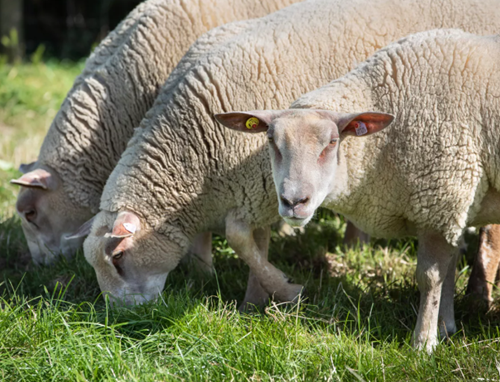
There have been numerous recent cases through SRUC Vet Services postmortem facilities where multiple deaths have occurred following mineral bolus administration in sheep. Please be aware of the following advice before administering boluses.
- Ensure the animals are over the minimum weight stated on the bolus packaging.
- Check that sheep prone to copper toxicity (e.g. Texels, Lleyn, Bluefaced Leicesters and North Ronaldsay) are not receiving multiple sources of copper (bolus plus mineralised concentrate or distillery waste).
- Make sure the bolus gun is the one recommended by the manufacturer.
- Ensure the bolus gun is free from damage and sharp edges.
- Ensuring the head and neck are in a straight line, gently insert the bolus gun to the back of the tongue and squeeze the trigger - avoid using excess pressure or force.
- Allow sufficient time for the job - don't bolus sheep in a hurry.
- If boluses themselves seem to break easily or have an oily residue do not use them and report to the manufacturer.
- Where possible, do not administer other treatments at the same time as boluses unless it is stated safe to do so by the bolus manufacturer.
Bolus administration to sheep is aimed at improving productivity and welfare. It is frustrating when this results in the death of animals. Below are some of the common pitfalls we see every year in animals submitted to SRUC.
Overdose
Table 1 shows a selection of the bolus' available in the UK, there are an array of available products which are suitable for different weights of animals and have differing durations of efficacy.
Overdose usually occurs when the products are used in animals which are under the weight recommended by the manufacturer, most often in lambs and smaller hill breeds or where two bolus' are administered instead of one, either in error or out of habit.
Where a copper bolus is administered to an animal receiving copper from another source (concentrate, distillery products, mineral licks) this can lead to copper toxicity, especially in susceptible breeds such as the Texel, Lleyn, Blue faced Leicester and South Ronaldsay.
Should toxicity be suspected on postmortem examination, counting the boluses present in the rumen and weighing the animal, if possible, can be very helpful, alongside collecting fresh samples of liver and kidney for testing. Food Standards Scotland (FSS) should be informed if toxicity is suspected in a food producing species, by telephoning 07881 516867 or emailing [email protected]. When cases are submitted to SRUC, they will be reported to FSS by a Veterinary Investigation Officer (VIO).
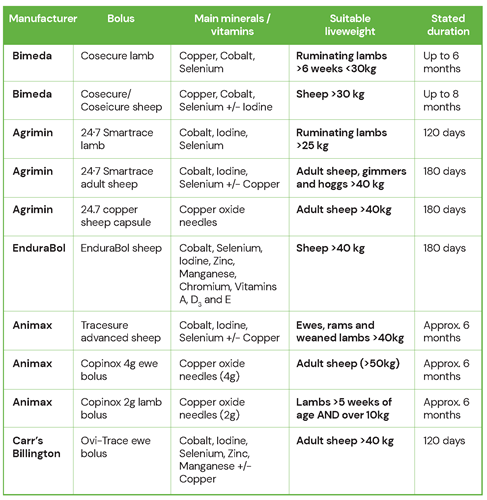
Table 1: Summary of common boluses available, recommended weight range and duration of action (always check individual product datasheets before use)
Intratracheal administration
Intratracheal administration is not an uncommon occurrence. It is not as immediately fatal as might be imagined, as the airway is not usually completely obstructed by the bolus, and animals are usually found dead the day after bolusing. Anatomically, it is more likely to occur if the head is stretched upwards and the end of the bolus gun is angled ventrally in the pharynx. If the animal is breathing heavily, the risk of inhalation of a bolus is likely to be increased. Postmortem diagnosis is usually uncomplicated, as long as the whole length of the trachea is examined.
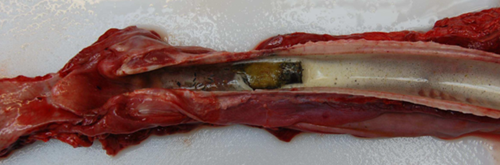
A bolus within the trachea of a sheep. Seven out of 400 ewes died within 24 hours of bolus administration
Pharyngeal trauma
Insertion of a bolus (or boluses) into the soft tissues of the pharynx is also not uncommon. This rarely results in the immediate death of the animal, but death sometime later can be associated with secondary infection or difficulty eating. These animals may also be presented to a clinician weeks to months after bolus administration for investigation of a swelling around the angle of the jaw or between the mandibles. Aspiration of black, metallic and sometimes purulent material from the mass is typical of a bolus injury. Seeing postmortem examination of the pharynx is often both diagnostic and impactful for the farmer.
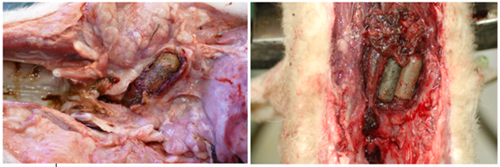
Fiona Crowden and Megan Fergusson, SRUC Veterinary Investigation Officers, [email protected]
Posted by SAC Consulting on 21/09/2026
