

Planning for water scarcity on Scottish farms
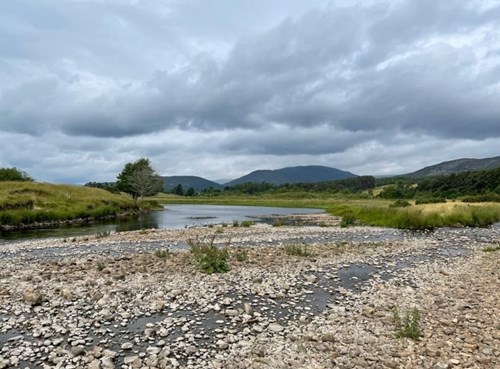
Drier spring and summer periods are becoming more common across Scotland, raising important questions about water availability at key points in the growing season. While Scotland has long been associated with abundant rainfall, shifting weather patterns mean that water is not always available when and where it is needed most.
Scotland is renowned for its plentiful supply of water and lush green landscape, but the climate is changing. Summers are becoming warmer and drier, while winters are becoming milder and wetter, with particularly pronounced changes in the east.
Periods of water scarcity are already becoming more widespread - May 2025 saw the whole of Scotland reach early warning to moderate scarcity levels - highlighting that this is a national, not just regional, issue. With shortages often peaking during the high demand growing season, how can farmers and growers prepare?
To support farmers and growers in adapting to these changes, the Centre of Expertise for Waters (CREW) has recently published a practical guide offering tools to assess risks and identify actions to improve on-farm resilience. The guide explains the trends in water availability and discusses the future prediction for Scotland. By examining these details, we can begin to prepare and work with a changing climate.
Every farm will face different risks depending on soil type, enterprise, location, and current water sources. A useful starting point is to assess where shortages could occur and how they would impact production. Options range from immediate interventions, such as fixing leaky troughs or taps, to longer-term projects like improving soil organic matter to increase water retention, investing in more efficient irrigation, or implementing or improving on-farm storage lagoons.
The most suitable options will depend on individual farm businesses and require careful consideration. Understanding these factors helps prioritise action and avoid reactive decision-making during periods of stress.
Questions to ask include:
- Have you spoken to your neighbours, and are there opportunities to share water supplies or storage?
- Would your business benefit from investing in technology such as soil moisture sensors or automated irrigation to improve efficiency?
By asking these questions, and making use of available tools, you can build resilience to future water management challenges within your farm business.
By asking these questions, and making use of available tools, you can build resilience to future water management challenges within your farm business.
Below is a graphic from the guide, highlighting some of the key interventions and methods that can be implemented to improve water management and resilience on farm.
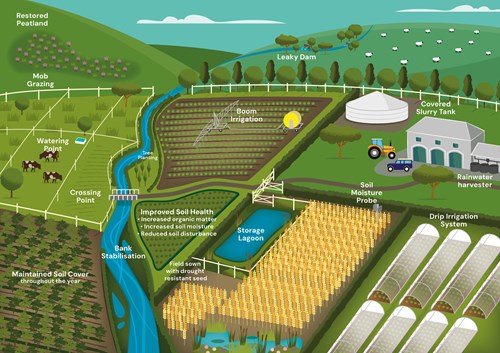
Farm with water resilience measures in place. Source: www.crew.ac.uk
How your business moves forward in this new climate will depend on your specific needs, but you will need to be aware of emerging trends, authorisation requirements and potential conflicts over water use.
By understanding vulnerabilities, improving efficiency, and investing in longer-term solutions where needed, farmers and growers can reduce risk and protect productivity. Acting early will be key to adapting successfully as water availability becomes more variable in the years ahead.
5 top tips
- Carry out a drought risk assessment for your farm.
- Speak to your neighbours – can you collaborate on water use?
- Monitor soils and crops to better target water use.
- Explore opportunities for collaboration with neighbouring farms.
- Plan ahead for abstraction limits and future regulation.
Fiona Salter, Senior Environmental Consultant, [email protected]
Posted by SAC Consulting on 18/05/2026
