

Managing Nutrition for Cows after Turn Out
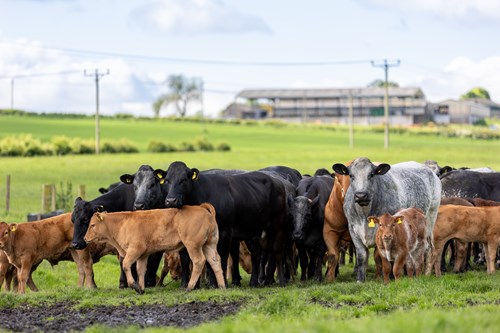
Spring 2026 has brought its challenges for early grass growth. A wet winter followed by a cold, wet spring compared to last year has slowed early grass growth in many regions in the country. This has meant a late spring flush for many extending winter requirements when forage supplies were already restricted following a dry spring and summer in 2025 . For suckler cows turned out to grass it is important to ensure there is enough grass cover to meet cows’ nutritional requirements and remember that availability and quality of spring grazing is a key determining factor for spring suckler herd performance.
The post calving nutritional requirements of a suckler cow increase significantly as she approaches peak lactation which on average will occur between 6.5-10 weeks post calving. Peak lactation also coincides closely with another key production stage, bulling.
For cows in peak lactation energy is prioritised first to producing milk to nurse her young then to maintain body condition and fertility. This means if nutritional supply is insufficient, condition and subsequently fertility are first to suffer. For mature cows this nutrition demand will include maintenance plus lactation which for a beef cow milk yield can range between 6-10l/day at peak depending on breed and quality of diet offered. First calved heifers are trying to meet the requirements for maintenance, lactation plus still growing themselves putting even more pressure of sufficient nutrition for ovulation.
Nutrition during the period before breeding is important. Animals should be on a rising plane of nutrition with sufficient availability of both energy and protein before service to maximise conception rates. For sucklers this will be between 120-140MJ/day depending on body weight, breed and parity which equates to around 60kg – 70kg of fresh grass a day or a minimum sward height of around 6cm in a set stocked system. The diet also must be a minimum of 12% protein on a dry matter basis. If grass supply is limited due to poor growth or nutrient availability or is unable to keep up with grazing demands supplementary feeding and or other options should be considered such as:
- Adapting grazing management: such as rotational or strip grazing to better utilise grass and allow for rest periods in order to build up dry matter availability.
- Supplementary feeding: such as additional forage (good quality silage) or concentrate in the form of a suckler roll or home mix cereals, typical feed rate for sucklers will be between 1-3kg/head depending on quality and quantity of grazing available.
- Creep feed calves to reduce grazing and lactation pressure on cows.
- Review groupings of cattle – prioritise best quality grazing for those most at risk such as first time calvers, lean cows, twins and aged cows that will most at risk of condition loss in lactation. Consider feeding concentrates to these groups with the late cold spring we are having as they will need additional energy.
- It is also essential to ensure that the cow’s mineral and trace element status is optimal – a low availability of grass may limit magnesium, increasing risk of staggers, and limit trace elements such as selenium, cobalt and copper essential for normal fertility.
Quality and quantity of grass available in spring is the key to success, however if you are concerned that grass growth and nutrient availability is not enough then discuss options with your nutritionist.
Lorna Shaw, Ruminant Nutritionist, [email protected]
Posted by SAC Consulting on 17/04/2026
