

Creep Feeding Lambs on Farm
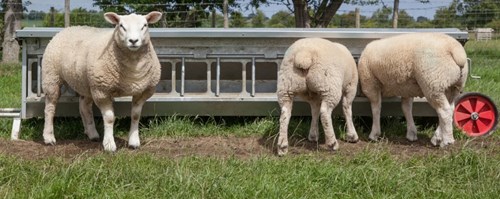
Getting lambs off to the best start and optimising performance is vital to a profitable sheep system. With grass growth slow in some regions due to the cold and wet winter/spring limiting feed availability into early lactation. Performance may be challenged if alternative options are not considered.
Consider creep feeding young lambs as a supplementary source of nutrition on top of their mother’s milk and grazing.
Creep feed can be introduced to lambs from around two weeks of age alongside milk, water and a readily available source of long fibre such as straw, hay or grazing.
What we look for in a creep feed:
- High energy – an energy dense diet is essential to optimise early performance of lambs – ideally, we should be looking for a creep feed between 12.5-13.0 MJ/kg DM.
- Protein – around 18% (as fed) at first then this can be dropped to around 16% once the lamb has reached around six weeks of age. Protein should ideally come from good quality sources such as soya and protected rapeseed meal. Although not as high in bypass protein peas or beans may also provide a good protein source if looking for a homegrown alternative. Care should be taken to balance beans carefully due in a feed mix for lambs due to their starch content.
- Pellet size – looking for a 3mm pellet to start to prevent risk of choke, once lambs grow and develop a 6mm nut is also an option.
- Vitamins and minerals – the feed should be supplemented to support growth, development and immunity with vitamins A, E & D, selenium and a source of cobalt/ vitamin B12 essential. A lamb creep should also include ammonium chloride at 0.5% (5000ppm) to prevent the risk of urinary calculi in castrates or entire males and have a calcium to phosphorus ratio of between 2:1.
Benefits of creep feeding
- Aids rumen development – creep feeding has been proven to aid rumen development through improved rumen villi development increasing surface area for nutrient absorption.
- Improved daily liveweight gains – ideally up to weaning we should be aiming for gains on average of around 200g/day at grass with creep fed lambs regularly achieving an average weight gain of 300g/day plus.
- Supports both the ewe and lambs during lactation – creep feeding will take some pressure of the ewe during lactation aiding her ability to retain body condition.
- Aid weaning transition – creep feeding can help to transition lambs post weaning helping to reduce any potential checks in growth.
- Reduced grazing pressure – particularly useful as a tool when grazing is compromised such as during a drought, post flooding, when temperature prohibits grass growth or if overstocked.
- Additional vitamin and mineral supplementation - reducing the need for other sources or supplementation such as blocks, drenches or bolus’s while feeding. Supplementary requirements should always be assessed.
Considerations of creep feeding
Cost – costs of creep feeding should be weighed up against the benefits and performance seen in the flock with performance monitoring important to quantify benefits. Cost will vary depending on feed quality and whether bought in bulk and bags.
Taking an average feed conversion of 6:1 (feed conversion will decrease as the lamb matures typically ranging between 3:1 – 12:1), creep cost at £320/t (bulk) and an average creep intake of 400g/day the average cost of feed per kg gain is around £0.78/lamb (Factoring in grazing also). Average liveweight cost of 400ppkg (QMS/IAAS, April 2026) meaning feed costs would represent around 19.5% of lambs value.
Disease risk – creep feeding will bring lambs together in closer proximity increasing risk of disease spread through nose-to-nose contact such as orf, cocci or feet issues to mitigate some challenges the feeder should be moved regularly.
Creep feed is not as economical as grass, but in the situation of grass shortages, it can ease the pressure while ensuring good growth rates. Decisions on whether or not to creep feed should be assessed on a flock-by-flock basis.
Lorna Shaw, Ruminant Nutritionist, [email protected]
Posted by SAC Consulting on 17/04/2026
