

Agritourism – What it means for Scottish agriculture
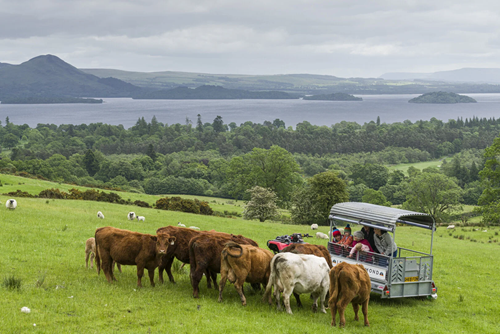
Scotland’s agritourism sector is thriving and confidence to invest in new enterprises on farms, crofts, and estates continues to grow.
For many rural areas of Scotland, particularly across the Highlands and Islands, tourism makes a substantial contribution to economic activity, employment, and livelihoods. Agritourism is a key growth area providing agricultural and rural based experiences to visitors looking to connect with farming, food production, and the environment.
In Scotland, agritourism is defined as "tourism or leisure on a working farm, croft, or estate, which produces food or fibre". This encompasses farm accommodation, tourism activities, or events that take place on a farm or in farm shops that sell their own products directly to visitors.
Many farm businesses have turned to agritourism to help build financial resilience, secure extra income and connect the public with farming. This can include things like self-catering accommodation, glamping pods, farm shops, pick-your-own enterprises, farm cafés, guided farm walks and visitor experiences.
The 2025 Scottish Agritourism Growth Tracker results illustrate that the sector is now worth almost £300 million and Scottish agritourism businesses welcomed 2.5 million visitors.
Earlier this year, I attended the inaugural Global Agritourism Conference held in Aberdeen. The conference was an excellent showcase of the diversity and vibrancy of the global agritourism sector with data, research, policy, and personal stories, providing a unique international learning opportunity with around 550 delegates from over 50 countries attending.
I thought the conference was a great showcase of the best in Scottish agriculture, agritourism, farm produce, and Scottish traditions, and an opportunity to learn from peers from overseas.
What were the main highlights?
- Self-catering accommodation, farm tours and experiences, and farm retail continue to be on trend, with health and wellness considered to be a real growth opportunity in future.
- UK consumers are placing greater importance on the health and nutritional benefits of farm produce (particularly beef, pork, and lamb), the provenance, and environmental impacts of the food they eat.
- Agritourism can be a catalyst to facilitate succession, provide new opportunities for the next generation, and concrete roles and responsibilities in family businesses. Encouragingly in Scotland, there is a growing trend of young people returning home to the family farm and driving new agritourism enterprises forward.
- Agritourism businesses have a significant multiplier effect and benefit to the rural economy, bringing more jobs and prosperity into rural communities. This is a common theme globally and evident here in Scotland.
- Quality, authenticity, and connections with local communities, are key characteristics in successful agritourism businesses across the world.
How does Scotland compare with other countries?
Based on my own observations and discussions, the overarching view of international delegates visiting Scotland was that our farmers and crofters are extremely forward thinking, innovative, and always looking at new ideas to add value. The diversity of experiences, from unique accommodation, farm tours, health and wellness activities like on-farm saunas and yoga retreats, lambing experiences, sheep shearing and sheepdog demonstrations, farm and croft produce, private dining, farm retail and vending, are just some of the wide range of agritourism enterprises offered on Scottish farms.
What do other countries do well?
Italy continues to be a major player in agritourism centring around excellent farm and local produce, with authentic dining and tasting experiences and strong connections with their cultural identity. Indian agritourism is also very culturally driven, focusing on traditions, people, and communities, where visitors can experience village life, food, and spiritual traditions. For example, in India, every 10 miles or so the community and culture in an area will vary slightly, providing new experiences for visitors.
Australian agritourism focuses on luxury farm stay experiences, food, and wine tours, where visitors can immerse themselves in nature-based health and wellness activities and enjoy unique accommodation. In Taiwan, they are proud to showcase their unique landscapes, ecology, and environmental assets, focusing more on sustainability and green wellbeing.
Closer to home in England, traditional farm shops are now becoming rural destinations by creating multiple experiences to increase longevity of customer stay and appeal to a wide range of demographics. For example, the inclusion of children’s play areas, dog parks, drive-thru’s, venue spaces and meeting rooms, hot-desk facilities, PYO fruit, sunflower and tulip fields, pumpkin festivals, and small-scale music festivals, are all growing trends south of the border.
What can we learn from other countries?
In my opinion, the top takeaways for Scottish agritourism businesses would be;
- International visitors seek immersive, personalised experiences, and really value the human connections they experience with families and local communities during their stay. Taking more time to meet, greet, and get to know your visitors helps to build stronger relationships, connections, adds value to their experience, and encourages a positive review. Tea, coffee, home-baking, and a warm welcome can go a long way to personalise and enhance a farm stay, tour, or experience. This may be an opportunity for someone in your family or business who thrives around people and may not necessarily be the farmer/crofter themselves. The business owner isn’t always the best person to manage customer relationships or welcome guests to the farm!
- UK consumers are placing greater importance on the health benefits of consuming high-quality protein (beef, pork, and lamb) over ultra-processed foods and are increasingly conscious about the environmental impact, food miles, and carbon emissions involved in our food supply chain. Communicating our high animal health and welfare standards, environmental, and nutritional benefits of supporting local farms continues to be a key opportunity for Scottish farmers and crofters.
- Continue to celebrate regional cultures, heritage, and traditions in our rural communities. Particularly in our crofting and island communities where unique culture, traditions, Gaelic language, arts, crafts, and music, are strong core values. Nostalgic marketing through imagery and storytelling integrated into farm and croft tours was identified as a great way to showcase our unique culture, traditions, and leverage positive memories from the past. Generational photos of your family and vintage farming tools/equipment can enhance visitor experiences, bring tangible authenticity, and is unique to you and your business.
- Accommodation is also vibrant and evolving. Visitors now want immersive experiences that go further than just a room for the night. Adding value through food and drink experiences, farm tours, private dining, farm to fork tastings, farm produce packs, BBQ boxes, outdoor saunas, yoga and wellness activities can really enhance your accommodation offer. Consider working with local people such as yoga instructors, running arts and crafts, wreath making, or photography courses, as they can enhance your agritourism offer with little capital investment. Keep refreshing your offer to encourage customer loyalty. Adding new or refreshed ideas every three to four years helps to keep customers interested and your business in the forefront of their minds.
Ultimately, Scotland’s agritourism sector is growing quickly and evolving offering unique opportunities for farmers and crofters.
Calum Johnston, Senior Consultant, [email protected]
Posted by SAC Consulting on 16/10/2026
