

Happy cows or moody cows – existing farm tech can tell the difference
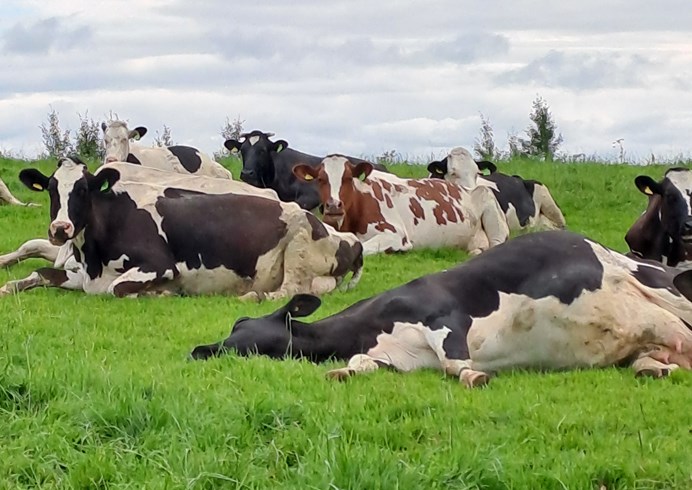
Scientists in Scotland have discovered that sensors on dairy farms could help identify happier, healthier herds.
A new study from the Digital Dairy Chain, part of the SRUC-led UKRI Strength in Places programme, has revealed that technology already worn by thousands of dairy cows could become a powerful new tool for monitoring animal wellbeing – helping farmers identify both thriving herds and those needing extra support.
Using ankle-mounted activity sensors commonly fitted for fertility and heat detection, researchers found they could predict whether farms were experiencing “good” or “challenged” welfare conditions by analysing how cows move, rest and behave together as a herd.
The findings mark an important step toward practical, large-scale monitoring of positive animal welfare – not just the absence of illness or injury, but signs that cows are genuinely comfortable, relaxed and content.
SRUC researcher Holly Ferguson said: “For years, welfare assessment has focussed mainly on identifying problems. What’s exciting about this work is that we’re beginning to identify measurable signs of positive experiences – what a ‘happy cow’ actually looks like in behavioural data.
“The technology is already on many farms, so this could offer farmers a practical, low-labour way to better understand herd wellbeing, while also supporting assurance schemes and consumer confidence.”
Traditionally, farm welfare checks focus on physical health and productivity measures such as lameness, disease or milk yield. But the team say good welfare is about more than avoiding poor conditions, it’s about providing cows with an environment which allows them to express natural behaviours.
Holly added: “Animals can be healthy without necessarily experiencing positive emotional states. We wanted to explore whether technology already in use on farms could help identify signs of comfort, calmness and social harmony within dairy herds.”
Pauline Murray, Programme Director for Digital Dairy Chain explains: “This important cow welfare project is part of our overarching work that brings industry and research together to show that many dairy industry challenges can be improved or overcome by working in collaboration. By working together, it showcases the strength of knowledge exchange in the dairy sector between SRUC, and Digital Dairy Chain partners, First Milk and Lactalis, to improve conditions and welfare for the future.”
The researchers found that one of the strongest indicators of positive welfare was behavioural synchrony – cows resting and moving together consistently. This is a known indicator of positive welfare, capturing the ability to express a “herd mentality”, which is often more prominent at pasture. The research showed that herds showing more stable, synchronised behaviour at pasture and when housed were more likely classified as having good welfare, while disrupted patterns were linked to more challenged conditions.
To validate the findings, researchers combined the sensor data with Qualitative Behaviour Assessment (QBA), a recognised welfare method that evaluated how cows appear emotionally. For example, whether they seem calm, relaxed, fearful, frustrated or content.
The key findings showed that:
- Farms with cows showing more consistent group resting behaviour were linked to better welfare outcomes.
- Lower and more variable behaviour synchrony was associated with challenging welfare conditions.
- Higher neck rail heights in housing systems were linked to improved cow comfort indoors, while cubicles dimensions below recommendations - including shorter beds caused by moving neck rails or brisket boards forward - were associated with poorer welfare.
- The sensor system predicted challenged welfare farms with up to 87 per cent accuracy and good welfare farms with up to 80 per cent accuracy.
- Small changes on farm, like moving neck rails or extending bed length indoors, could have a big impact on positive welfare in cows.
The project involved 15 dairy farmers across south and west Scotland and northern England, working in partnership with milk processors First Milk and Lactalis.
Derek Kennedy, Farm Supply Manager at Lactalis said “It’s great to have the means of measuring positive welfare on farm, which has the potential to be applied on a more widespread basis and is suitable for use in housed and pasture situations. Even better than this, the new method is based on information already being collected from existing sensor technology sensor adding value on farm.”
More information on the Digital Dairy Chain website
Posted by SRUC on 25/06/2026
