

Lymph Node Aplasia in Scottish Blackface Lambs: Free Investigations Still Available
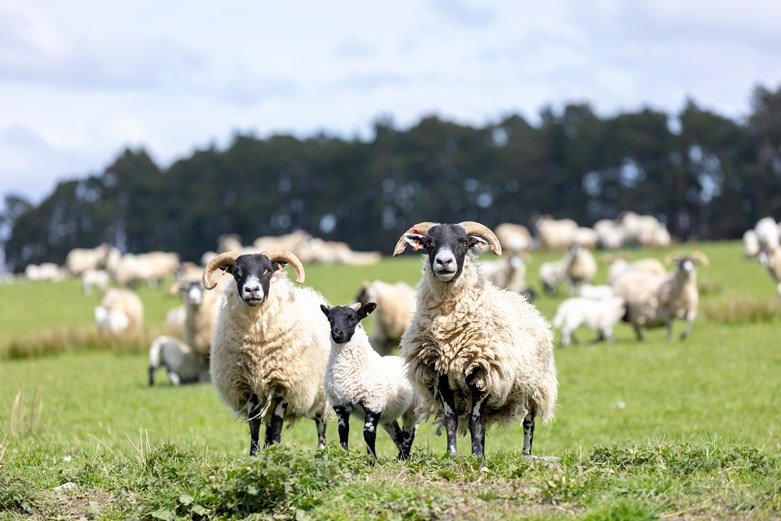
As Scottish Blackface flocks begin gathering lambs off the hill for weaning, farmers and vets are being reminded to remain vigilant for cases of lymph node aplasia, a rare but serious condition that leaves affected lambs unable to fight infection.
To support ongoing research, Livestock Health Scotland is continuing to fund free post-mortem examinations of suspected cases at SRUC post-mortem facilities on a first come, first served basis. Farmers are encouraged to work with their vet to submit affected lambs for investigation, helping researchers build a better understanding of the condition.
What is Lymph Node Aplasia?
Lymph node aplasia is a condition in which lambs are born without lymph nodes, a vital component of the immune system. To date, the condition has been diagnosed in lambs from at least ten Scottish Blackface flocks.
Affected lambs typically appear healthy at birth but develop severe cases of orf between two and six months of age. Because their immune system is compromised, these lambs are unable to respond to treatment and often experience progressive weight loss. Without euthanasia, many will eventually die from infection.
Post-mortem examinations have confirmed the complete absence of lymph nodes in affected animals. While severe orf is the most obvious sign, some lambs are also likely to succumb to other infections that may be less visible.
Is the Condition Inherited?
Current evidence suggests that lymph node aplasia is most likely an inherited condition. Researchers from SRUC Veterinary Services and the Roslin Institute have carried out genetic testing on affected lambs, as well as their dams and sires, but the specific gene or genes responsible have not yet been identified.
A new PhD project, part-funded by the Blackface Sheep Breeders' Association, has recently begun with the aim of uncovering the genetic cause of the condition. Identifying the underlying mutation could eventually lead to the development of a screening test for breeding animals.
Why Sample Submissions Matter
Researchers are seeking additional samples from affected lambs and their parents to help progress the investigation. The more cases that can be examined, the greater the chance of identifying the genetic basis of the disorder.
The Blackface Sheep Breeders' Association is also raising awareness among members and encouraging anyone who believes they have seen affected lambs, either this season or in previous years, to contact their vet or SRUC Veterinary Services. All information will be treated in the strictest confidence.
Reporting Suspected Cases
If you encounter Scottish Blackface lambs suffering from unusually severe, untreatable orf infections, particularly between two and six months of age, consider lymph node aplasia as a possible cause and discuss the case with your veterinary surgeon.
Free post-mortem examinations remain available through Livestock Health Scotland-funded investigations, providing a valuable opportunity to support research while improving understanding of this potentially inherited condition.
For further information, contact Heather Stevenson at SRUC Veterinary Services.
Posted by SRUC Veterinary Services on 21/08/2026
