

Straw Market Update and Outlook: A Rising Cost for Livestock Farmers
2025 harvest
As well as impacting yields of silage and hay, the dry weather across 2025 has also impacted straw yields, with reports highlighting regional differences in straw availability and pricing. Lower forage yields going into winter have not been helped by the dry summer affecting grass growth which has led to several farmers across the country having to feed their winter forage stocks earlier. This has led to a reduced supply of straw going into winter and contributed to straw prices.
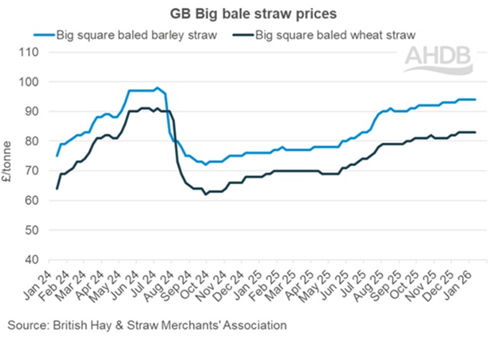
Ahead of winter housing, AHDB reported at the end of September, that straw prices had increased by 19% for barley straw with an 18% increase for wheat straw in comparison to September 2024.
2026 prices
As straw supplies tighten as winter progresses and as we approach calving and lambing season it is likely that prices will rise. It is advised that anyone who is yet to source straw ahead of calving or is looking to have a shortfall in straw contact their straw suppliers and merchants to access availability and discuss straw requirements.
Early January auction sales of fodder have across the country exceeded vendor expectations with several markets reporting straw supplies falling short of buyer’s requirements. Aberdeen and Northern Marts, Thainstone centre first fodder sale of the year sold 460 round bales of inside spring barley straw to £14.40 per bale averaging £12.48 (+£1.06 from 2024). Outside spring barley straw (200 round bales sold) realised £10 per bale and averaged £8 (-£2.37 from 2024).
Round bales of spring barley straw at Monmouthshire’s first sale on 13/01 sold to £37 per bale.
For week ending 11 January figures from the British Hay and Straw Merchants Association (BHSMA) show GB straw prices for big square bales of barley straw to be up by £18 per bale and big bales wheat straw to be up by £14 per bale from 2024 levels. Figures from the British Hay and Straw Merchants Association (BHSMA) show straw prices for the week ending 18 January for southwest Scotland at £90/t for big squares of barley straw and £85/t for big square bales of wheat straw. While prices in southeast England for big squares of barley straw and big square bales of wheat straw to be sitting at £85/t and £70/t.
Straw prices and cost of production
Straw is a significant input cost to livestock farmers, especially for upland suckler herds. For beef suckler herds, AHDB estimate that bedding costs make up 18% of variable costs and 5% of all costs. With straw prices reportedly approx. 20% higher ahead of winter in September compared with 2024 price levels, it is anticipated that prices will rise. Remember straw price increases will be reflected in livestock cost of production and ultimately affect net margin.
Buying early or during the main harvest period is likely to reduce the cost of straw.
Managing straw supplies
- Ensure straw is stored well - 15-20% of a soft centred round bale can be in the last 4’’, meaning if it is very weathered, then a large proportion of the bale is of little use as bedding.
- Minimise waste – scrape feed stance and a having a step to minimise straw being dragged onto the feed stance and scraping that area not bedded it can reduce straw usage by 30%. Also ensure water troughs are not leaking.
- Improve ventilation - creating a dryer atmosphere will use less bedding, as well as improve livestock health.
- Bedding system – Rolling out straw bales uses less straw than simply taking the nets off and allowing cattle to self-bed.
- Straw alternatives – consider use of alternatives such as wood-based products or rape-straw to create an effective base layer.
- Ensure only productive stock are taken through winter – scan breeding stock early and sell culls.
Sarah Balfour, Beef Consultant, Sarah.Balfour@sac.co.uk
Posted by SAC Consulting on 19/01/2026
