

Maximising the Value of Muck and Slurry
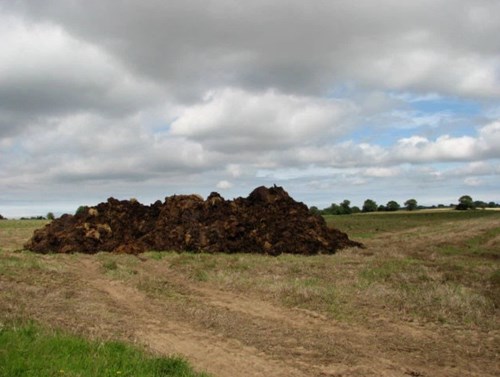
The dung midden is one of the most valuable commodities on a farm. It is our easiest, most efficient and cheapest resource to maintain the farm’s nutrient budget in good health. Efficient recycling of the N, P and K from livestock manures will reduce the reliance on bought in mineral fertilisers, provide a substantial proportion of crop requirement for yield and maintain or improve soil P and K status.
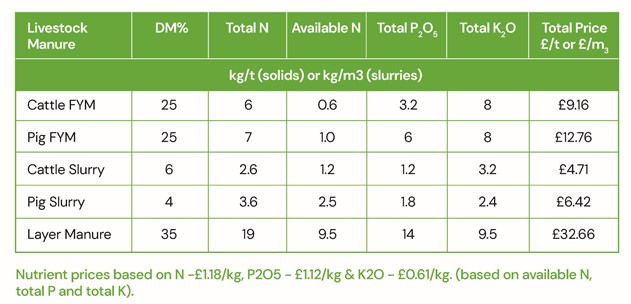
The following table highlights the current nutrient value of common muck and slurry types.
One of the challenges facing many upland producers and certainly producers in remoter areas and the islands is providing enough straw for bedding. The cost of getting that straw in the shed can be considerable which makes it more important to make best use of it when it comes out the courts after winter.
A farm running around 100 suckler cows that are overwintered in straw-bedded courts for a period of around 200 days (28 weeks) would typically produce over 1,000 tonnes of FYM (1,030t using published values) equating to 36t per week. Using current fertiliser values and nutrient composition from the table above, we can value that 1,000 tonnes at £9,160.
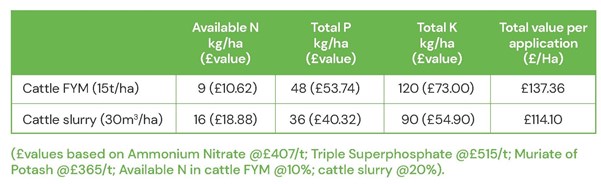
If we were to spread that 1,000t in spring onto cereal stubble land, ploughing down the day after application, we could cover some 66ha whilst meeting both the P and K requirements of a spring barley (feed) crop (assuming moderate soil nutrient statuses) and providing about 7% of crop N requirements. (~130:50:70 kg/ha N:P2O5:K2O).
Maximising the available nutrients
To make the best use of the readily available nitrogen within farmyard manure (FYM) and slurry, storage and timing of application are important. Rapid incorporation into soils minimising the volatilisation of nitrogen as ammonia gas into the atmosphere. The table below highlights the differences in available nitrogen depending on timing of application and speed of incorporation and can be used to assist you with fertiliser planning and nutrient budgeting.
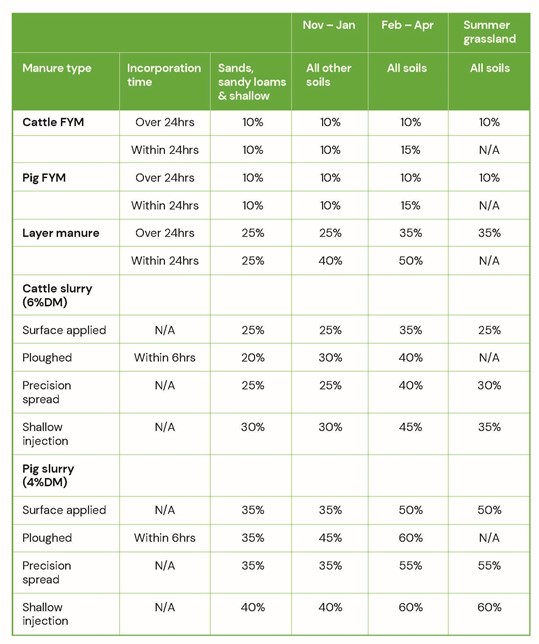
In Nitrate Vulnerable Zones (NVZ), nitrogen availability values contained withing Scottish Government guidance must be used.
Storage of FYM in high compact stacks in middens and leaving applications of manures until the springtime are therefore the best way to maximise the availability of nitrogen and other nutrients, which help to support the growth of crops and grassland.
For further information and details of the nutrient content of other manures, follow the link below to Technical Note 736 below on Scotland’s Farm Advisory Service website.
To get accurate analyses for your own muck and or slurry and improve the accuracy of your own nutrient planning, contact your local SAC Consulting office for further details about sampling and analysis.
5 top tips
- Use full nutrient value of FYM and slurry to provide significant savings in fertiliser costs for growing crops.
- Minimise volatilisation losses from FYM and slurry with rapid incorporation into soil.
- Correct storage of manures helps to reduce losses to the environment.
- Know your fields pH and nutrient status.
- Analyse your manures.
Useful links
- www.gov.scot/publications/nitrate-vulnerable-zones-guidance-for-farmers
- www.fas.scot/publication/technical-note-tn736-optimising-the-application-of-livestock-farmyard-manures-and-slurries
David Simpson, Senior Consultant, David.Simpson@sac.co.uk
Posted by SAC Consulting on 16/01/2026
