

Maximising biodiversity benefit with EFA hedges and grass margins
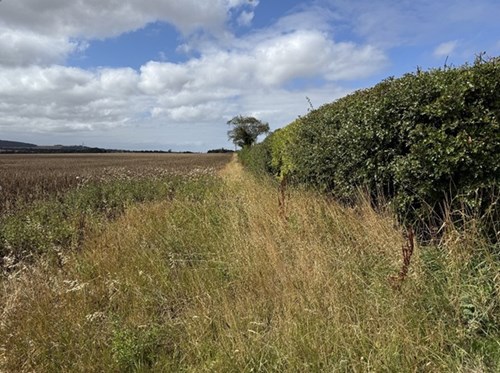
The greening rules for the Basic Payment Scheme have changed in 2026, with new options and some changes to rules for existing options. Full guidance can be found on the Rural Payments website. The previous exemption for farmers with more than 75% forage has been removed, so any business that grows 15 hectares or more of arable (including temporary grass) must carry out greening measures. This year for the first time many mixed farms will be introducing Ecological Focus Areas (EFAs). This presents an opportunity to boost the biodiversity benefits on your farm associated with greening.
Greening measures can seem a daunting prospect, however, for livestock farmers, there are plenty useful options that can be beneficial for your business.
Hedges can be used, and these can quickly add up to a good proportion of the requirement. The rules for this year have changed though; you will not be able to trim an EFA hedge from the 1 March - 1 December, unless for road safety reasons, or in a field where oilseed rape or temporary grass is to be established. The extended period of no cutting is much better for wildlife.
Hedge gaps can now only be 5m (previously 20m). If you choose hedges for EFA, it gives an opportunity to walk along the hedge, assess any gaps, and consider planting up with a mix of native species. Plants should be planted at 6 per metre in staggered rows. It might be necessary to control weeds in the first year of establishment. It may also be necessary to use vole guards or spiral guards. Whilst there is a cost associated with planting up hedge gaps, there are many benefits to wildlife from creating a continuous hedge. Hedges act as important wildlife corridors and are particularly beneficial when they can link larger habitats such as woodlands. They provide nest sites and food sources for many farmland birds, insects and mammals. They also provide shelter for livestock, and can harbour many beneficial insects, which have positive effects on controlling crop pests.
Many people pair EFA hedges with EFA grass margins. The key rule change for this year is that EFA margins must now be a minimum of 3 metres wide. Any new margins, including extension to existing 2m margins, must be sown with a diverse grass sward or a wild bird mix (suitable species are listed online). For many, this poses a dilemma where they have existing 2m margins, particularly if they are alongside hedges, as you cannot cultivate within 2m of the centre line of a hedge, and few people will be able to sow just an additional one metre of margin. The best option might be to extend just some of the margins to 5m or 6m (depending on the width of the seed drill), and leaving some margins at 2m, knowing that they will no longer be claimable for EFA. The benefits to wildlife of a wider grass margin are huge, and the enhanced species mix will mean that margins will have a greater diversity of plant species, attracting a wider range of insect species, and where flowering plants are included, pollinators will increase. Rough grass margins provide habitat for small mammals, which can help encourage barn owls.
The expense of cultivating, sowing and the cost of seed means that it is worth doing a good job; choosing the right species and creating something that you enjoy looking at. Discuss options with your seed merchant as they will know what species will do well in your area and with your soil types. If you want the flowering species to survive and last well beyond the first year, it is important to mow or graze the margin in the first year to help control rank grasses and allow more delicate species to flourish. If you go for a wild bird seed mix, it will need to be managed annually.
5 top tips
- Start with a map, marking on existing hedges and margins that can be used for EFA.
- Familiarise yourself with the new EFA rules, ensuring that you can meet the requirements of any options that you choose, but also that they are suitable for your farming system. Don’t over complicate it!
- Check for any gaps greater than 5m in hedgerows and consider planting up gaps with a mix of native species.
- If you currently have a network of 2m wide grass margins, now is the time to extend them. Speak to your seed merchant to choose the right mix for your area, and to create a diverse and visually appealing margin.
- If you are establishing new margins, make sure to factor in time to manage them properly. Whilst thick tussocky margins have some biodiversity benefit, you will get the most benefit and enjoyment from a well-managed margin. This will require time to cut or graze in the first couple of years.
Mary-Jane Lawrie, Senior Agricultural Consultant, [email protected]
Posted by SAC Consulting on 18/05/2026
