

Calf Suck Reflex and Stomach Tubes

Ensuring calves suckle and absorb enough colostrum is important. A good suck reflex is essential for sufficient ingestion and absorption of colostrum. SRUC Veterinary Services recently highlighted findings from a research project carried out by the University of Calgary, which looked at the factors which can be assessed in newborn calves to predict colostrum intake.
Dystocia (difficulty of calving) was a strong predictor of whether a calf would ingest colostrum or not. Calvings were scored according to the level of assistance. A summary of the results is included below.

A calf’s suck reflex was also found to be strongly correlated with colostrum ingestion. Calves that have a weak suck reflex after birth, tend not to absorb colostrum well. When combing the dystocia score with suck reflex calves at the highest risk of hypogammaglobulinaemia were identified as shown in the table below.
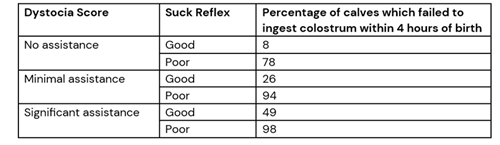
Hypogammaglobulinaemia in calves is a caused by inadequate colostrum, poor colostrum quality (low IgG), or delayed consumption e.g. outside the first 6 hours. It is crucial for calf survival that calves which have had a difficult calving and or have a poor suck reflex are given sufficient timely colostrum.
Stomach Tubes
With calves that are slow to stand or have a weak suckle reflex, a stomach tube proves invaluable at calving time to ensure that a calf gets the colostrum it needs. It is essential to ensure that stomach tubes are in good condition (cleaned and disinfected) and free from any sharp edges. Last spring SRUC reported a case of a 48-hour-old calf, which had been fed by a stomach tube several times due to lack of suckling to have a ruptured oesophagus, oesophageal laceration and damage to the soft tissues. This is most likely to have been caused by a sharp edge on the tubing equipment.
Although it is not uncommon to see mild bruising, and occasionally ulceration within the oesophagus, more severe trauma is less likely unless equipment is badly maintained or staff are not adequately trained. Check your stomach tubes now to ensure they are smooth and have no damage from previous use. Make sure that farm staff using stomach tubes are appropriately trained.
Sarah Balfour, Beef Consultant, Sarah.Balfour@sac.co.uk
Posted by SAC Consulting on 18/02/2026
