

Too much or too little – is this the future for Scottish water?
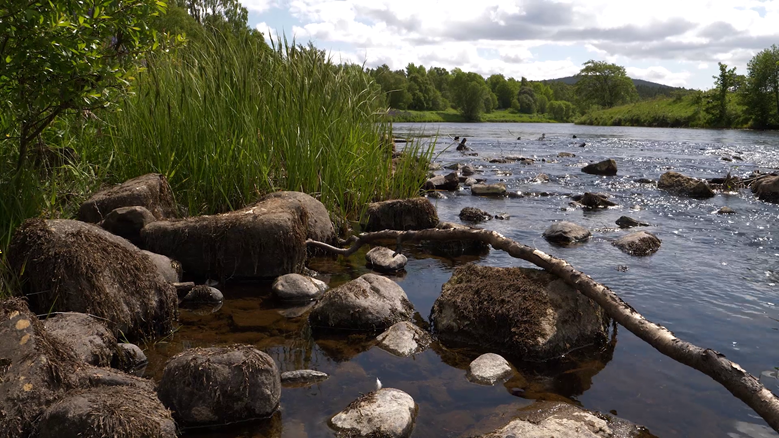
We are approaching the end of another very dry summer, where regions across Scotland have experienced sustained periods of low flow, lack of rain and reduce groundwater levels. We have seen land managers having to adapt, think outside the box or prioritise land to sustain yields and reduce the negative impact of a changing climate. Thankfully we have had cooler temperatures, and higher rainfall than our neighbours in England and Wales, but the impact has still been felt across Scotland.
Scotland is renowned for its water, with images of mountain ranges with cascading waterfalls, to our vast lochs flowing alongside areas of lush green landscape. Water has always been available in Scotland, but in a changing climate we must not be complacent. The data shows that typical summers are becoming warmer and drier, while winters are becoming milder and wetter, with particularly pronounced changes in the east. This can affect our drinking water, ground water, animal productivity, crop yields – the list goes on and on. As a result, how we manage and use water must adapt in order to minimise impact.
The timing and intensity of rainfall can have a significant impact on how effectively water can be stored and used. The challenge is not only limited supply, but also increased demand, putting further pressure on already challenged resources. This year, wildfires have decimated areas of the Cairngorms, and the East Coast of Scotland has seen prolonged periods of water scarcity, with areas falling into significantly low levels for several weeks during the key growing season for crops. Reduced yield, animal health, and habitat destruction have been the consequence, but what can we do?
To build resilience on and within the land, a good place to start would be the soil. In Scotland we are witnessing prolonged dry periods and additionally heavy, often localised rain events throughout the year. Though rain is needed, this can cause its own problems. Following extended dry periods, the soil is vulnerable, and intense rainfall can wash these soils away, increasing sediment deposition into waterways, roads, and away from the land where it is needed.
Working to improve our soils offers multiple benefits when building resilience to a changing climate. Healthier soils act as a vital buffer for water management. Soils capable of storing water efficiently have shown remarkable resilience against intense rainfall, prolonged droughts, and rising temperatures.
Generally, ‘good’ soil is well-drained, uncompacted, rich in organic matter, and teeming with microbial and earthworm activity. While establishing this robust baseline makes subsequent land management much easier, rebuilding soil organic matter is a slow, complex task that requires a longer-term approach.
Nevertheless, as extreme weather events become more frequent, establishing a strong soil foundation remains essential for mitigating the impacts of both flooding and water scarcity, ultimately supporting farm productivity and profitability.
Building resilience into the land will be key to coping and adapting to water scarcity in Scotland. There are a host of other mitigation measures out there to explore. When it rains, intensely or otherwise, having the ability to store this water when it comes can offer another great option to support farms. This could be from harvesting the rain into storage tanks, to installing storage lagoons.
Each farm and estate is different - what works for one may not be the best option for another. However, starting these conversations and investigations for your own situation now can lead to better planning and possibilities in future.
In 2026, the Centre of Expertise for Waters (CREW) published ‘Planning for Water Scarcity’, offering practical advice for farmers and growers to improve the efficiency of water use across the farm businesses in Scotland. The guide is designed to walk farmers and land managers through understanding water scarcity and the implications, to providing mitigation options to suit time and various budgets.
Extreme weather events are now predicted to increase in frequency. Putting in mitigation measures now will support climate resilience on your land and help to protect your business in the years ahead.
Fiona Salter, Consultant, SAC Consulting
Useful resources:
- SEPA Water Scarcity Tool
- CREW Planning for Water Scarcity
- Farming and Water Scotland
- Water Scarcity Plan for Scotland
Posted by SAC Consulting on 31/08/2026
