

Rules of Colostrum for Lambs
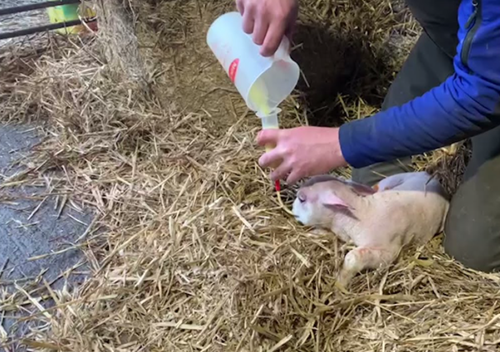
Ensuring lambs receive enough colostrum is key to ensuring high rates of newborn survival. It is vital that newborn lambs receive enough high-quality colostrum within the first 24 hours. Colostrum provides energy, nutrients, helps the lamb to maintain body temperature and crucially allows for antibodies to form the lamb’s passive immune system. Newborn lambs do not have antibodies, because the antibodies in the ewe’s blood stream do not cross the placenta.
In the first few hours of life, lambs require 50 ml/kg of liveweight e.g. an average 5kg lamb needs 250 ml (50 ml/kg). By the time the lamb is 24 hours old, it should have received 200 ml/kg of liveweight. This amount is determined by the lamb’s requirement for heat production, therefore, lambs born on the hill will require more than a lamb born indoors.
The composition of ewe colostrum typically consists of approximately 36% – 43% total solids, 10% – 13% fat, 2 – 3% lactose and 18% – 21% crude protein. Ewe nutrition in the final weeks of gestation will influence the quality of the colostrum, therefore it is important that her energy and protein requirements are being met. It is extremely important to ration the in-lamb ewe appropriately to ensure the production of good quality colostrum is stimulated. Rations should be tailor made to the quality of forage that is being offered to the ewe. This is even more important this year, given that silage analysis has highlighted a significant number of samples received are low in energy. This is resulting in energy being the first limiting factor to performance in many rations this year. Forage in the late stages of pregnancy should ideally be >12% CP (Crude Protein) for optimal colostrum production and well balanced with energy in the diet.
A key component of colostrum is the immunoglobulin content and in particular, immunoglobulin G (IgG) which is absorbed across the intestinal wall and provides the lamb with passive immunity. Typically, ewes’ colostrum contains 50g IgG/ml when lambs are born and this immunoglobulin yield in the colostrum declines at approximately 45, 34 and 12g at hours 1, 10 and 18-hours post-partum, respectively. The lamb’s ability to absorb immunoglobulins will also decline with time after birth, making getting quality colostrum into the lamb in a timely manner essential. Research has shown that there are several factors that influence colostrum production in ewes including gestation length, age of ewe and diet. Generally, increased gestation length has been associated with higher volumes of colostrum due to more time allowing for further accumulation of colostrum in the mammary glands. It has been shown that as dam age increases, there is an increase in colostrum volume which is associated with mammary gland development at different ages.
Within a flock there can be wide variation in colostrum quality, and studies have shown approximately 25% of colostrum samples provide inadequate levels of immunoglobulins. Poor quality colostrum has been associated with dams in poor body condition score again highlighting the importance of ewe condition and ensuring that nutritional requirements are being met. Using a Brix refractometer is a relatively quick and cheap method of indirectly assessing the immunoglobulin content of colostrum. Brix refractometers with a 0 – 32% scale can be found online for under £20. Good quality colostrum should have a Brix reading of >26.5% and colostrum that is considered sub optimal will be <22%.
Ideally all lambs should get their colostrum from their mother, but this is not always possible where lambs are born in multiples, ewes have poor yield or have misshapen teats. Ewe colostrum is the best start a lamb can get but in situations where ewe colostrum is not available or the ewe’s colostrum does not meet the requirements of the lamb, a colostrum replacer is essential. Ideally, if any ewe has excess colostrum this can be milked out and used however this may not be an option and a powered colostrum substitute is then the best option, although very few commercially available colostrum replacers come close to ewe colostrum.
Take must be taken when heating or thawing frozen supplies so not to denature the protein-based immunoglobulins. If the water is too hot for your hand, then it’s too hot for colostrum. Colostrum replacer should be mixed in accordance with the instructions with the powder and water weighed accurately, ensuring that it is heated to 39°C. Colostrum replacer should be given to lambs as soon as possible, and ideally within the first couple of hours of birth to allow for the passive transfer across the intestinal wall. With lambing drawing closer, now is the time to get organised and ensure that you have a supply of powdered colostrum to hand which might prove to be a lifesaver.
Five Top Tips
- Think three Q’s – quality, quantity, quickly.
- Lambs require 50 ml/kg of liveweight e.g. an average 5kg lamb needs 250 ml (50 ml/kg) in the first 24hrs.
- Consider using a Brix refractometer to assess the immunoglobulin content of colostrum within your flock, aim for a brix reading >26%.
- If you have concerns about colostrum quality speak to your vet about metabolic profiling and blood sampling to assess pre-lambing nutrition and colostrum absorption.
- Select the highest quality powdered colostrum available and ensure that the replacer is mixed according to the instructions and not above 39°C.
Cara Campbell, Senior Consultant and Nutritionist, Cara.Campbell@sac.co.uk
Posted by SAC Consulting on 16/02/2026
