

Ovine Keratoconjunctivitis (Pink Eye) in Sheep: Causes, Signs and Control
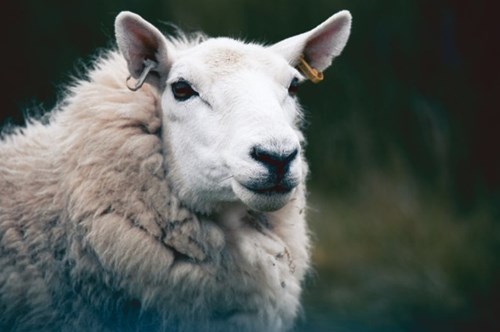
Mixing of sheep around tupping time often leads to increased reports of keratoconjunctivitis outbreaks in sheep during late autumn/early winter. This condition can be very frustrating due to its tendency to recur following treatment. Trauma to the eye caused by bad weather such as high winds and snow can predispose to clinical disease. Large numbers of animals can be affected especially when animals are in close contact for example close head-to-head contact between sheep, occurring at feed troughs.
What causes it?
Infectious keratoconjuctivitis (IKC) also known as pink eye is a bacterial infection affecting the eyes. IKC is commonly caused by mycoplasma conjuctivae. Other bacteria which may contribute to clinical signs include moraxella ovis, staphylococcus aureus and listeria monocytogenes.
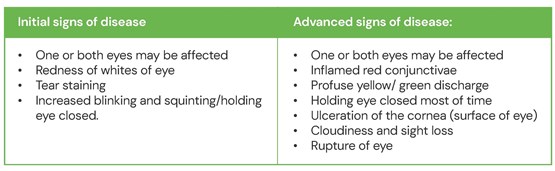
What are the clinical signs of infection?
How is IKC transmitted?
- Damage to the eye caused by high winds, snow or close contact with plants such as heather can predispose to disease.
- Infection is spread most by nose-nose contact. Indirect spread on hands can also play a role.
- Outbreaks may be triggered by mixing, tight stocking and close head-to-head contact between sheep, such as occurs at feed troughs, during housing or gathering for handling.
- Bought-in ‘carrier’ animals are the likely initial source of infection. M. conjunctivae can remain on the eye surface three to six months after treatment and resolution of disease.
How is IKC diagnosed?
Get you veterinary surgeon to take a look! They will most likely be able to make a presumptive diagnosis after examining affected sheep. Ocular swabs can be taken for specific PCR test for M conjunctivae. Routine cultures can also be performed to look for other bacteria (Moraxella ovis, staphylococcus aureus, listeria monocytogenes).
Treatment
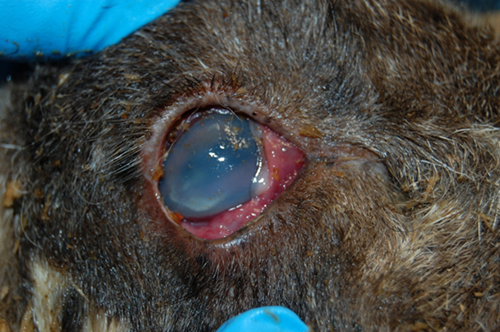
Infection can spread rapidly through the flock with outbreaks lasting weeks to months. It is vital to seek advice from your veterinary surgeon early to ensure appropriate treatment. Injectable or topical antibiotics are usually required, and, in some cases, painkillers may also be needed. To reduce spread within the flock wherever possible affected animals should be segregated for treatment and not returned to the group until they are clinically normal. Outbreaks can last for a period of weeks to months.
5 top tips
- Quarantine new and returning sheep to reduce the risk of introducing IKC to the flock.
- Reduce to a minimum, conditions that make sheep vulnerable to IKC and be vigilant for infection following periods of bad weather e.g. snow/high winds and when animals are in close contact or mixed e.g. tupping time.
- Monitor closely for early clinical signs of IKC including redness, increased tear staining and excessive blinking.
- Isolate any animals showing signs of IKC and only return them to the flock when symptoms have resolved.
- Seek advice from your veterinary surgeon promptly so affected animals can be treated effectively.
Lynn Gibson, SRUC Veterinary Investigation Officer, Lynn.Gibson@sruc.ac.uk
Posted by SAC Consulting on 16/01/2026
