

Optimising Winter Sheep Housing
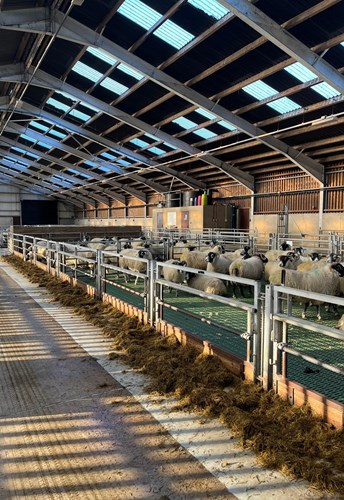
A hot topic at this time of year is straw availability and housing strategies for the winter. Although sheep slats have used widely in Ireland, the same uptake has not been seen in Scotland. However, sheep housing over winter is now being considered more particularly with a reduction in available winter grazing’s and climate change resulting in Scotland experiencing warmer and wetter winters, with increased flooding instances impacting on winter pasture quality and grazing availability.
The biggest advantage to using sheep slats is savings in cost of straw and time and cost of labour bedding sheep, as well as giving you the ability to house more sheep per square metre, allowing for flocks to maintain or increase stocking densities when grazing is not available over the winter months.
Sheep slats offer the opportunity to house sheep in a hygienic environment. The cleaner, drier conditions found in slatted housing often lead to improved animal health and welfare, through reduced lameness, whilst also reducing labour.
Housing sheep on slats over winter allows pastures to rest and recover, preventing damage from poaching and allowing a significant rest period for grass growth before lambing. Housing also allows businesses to make best use of grass by conserving summer surpluses for winter feeding.
Getting Started
Stocking density - The stocking density will depend on the age and condition of the animals. The table below summarises the recommended space per animal:
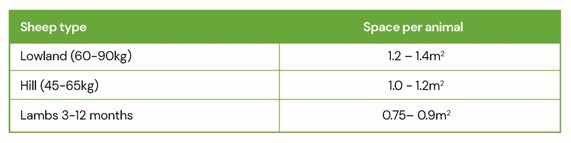
Correct stocking density is crucial for maintaining the cleanliness of slats, as sufficient foot traffic is needed to push manure through the gaps.
Winter shearing offers an opportunity to increase space efficiency and improve animal monitoring around lambing time.
Feed space – Adequate barrier/feeding space must be provided for all animals housed. This is particularly important if feeding concentrates rather than ad lib as dominant animals may prevent others from reaching the feed.
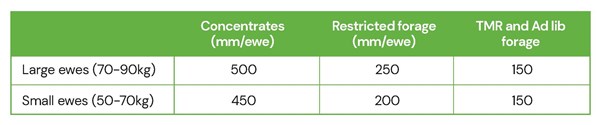
Many farmers with ad-lib Total Mixed Ration (TMR) systems report reduced competition for feed space as animals feed at their own convenience. Many attributed this to reduced incidences of malpresentations and prolapses at lambing time.
Manure management – Sheep housing with slats often incorporates slurry tanks for managing waste as slurry. These systems require sufficient storage space to comply with the General Binding Rules (GBRs), which mandate 22-26 weeks of storage. While most sheep housing systems don’t require housing for such long periods, this offers an opportunity to maximise manure storage by importing organic materials like digestate and hen pen manure, thereby reducing the need for inorganic fertilisers. Other systems treat manure as solid waste, requiring only enough storage for the liquid fraction (urine, rainwater, wash water).
Forage quality – Producing high quality forage is crucial when feeding housed sheep, especially when feeding pregnant or lactating ewes. The optimal silage is leafy, high in protein, and highly digestible. High-quality silage reduces both the amount and duration of concentrate feeding during housing. Chopped silage is best as bulky feeds such as hay can block the slats.
Before housing sheep, it's important to assess alongside a nutritionist whether the farm has the capacity to produce high quality silage, which may require increased nitrogen input and shutting off silage fields earlier.
Ventilation/Draughts
Proper ventilation is essential in a sheep slatted shed to maintain a healthy environment for the flock and ensures the slatted system works as intended. Good airflow removes moisture, ammonia, and airborne bacteria that can build up when manure collects beneath the slats, preventing respiratory issues and other conditions. It also helps keep the shed dry, reducing the risk of foot problems and improving overall comfort. Effective ventilation regulates temperature, preventing heat stress in warmer weather and reducing condensation in colder months. Altogether, a well-ventilated slatted shed and avoiding draughts at sheep level supports better animal welfare, healthier stock, and more efficient housing management.
Five Top Tips
- There are numerous types of material that slats can be made from, with plastic slate often being the most expensive. Consider and evaluate which material is best for you.
- Wool must be cleared from slats to stop them blocking.
- Ensure animals have adequate feed space.
- Ventilation and airflow are key for maintaining a healthy environment for the sheep. Ensure that there are no drafts from below the sheep, to stop them being cold especially when shorn.
- Check farm assurance standards and organic standards if these are relevant to you.
When evaluating the use of slats for sheep, you should weigh up the cost and availability of straw against the cost of the slats.
Carol-Anne Warnock, Consultant, Carol-Anne.Warnock@sac.co.uk
Posted by SAC Consulting on 11/12/2025
