

Managing Early Pressures on Young Lambs
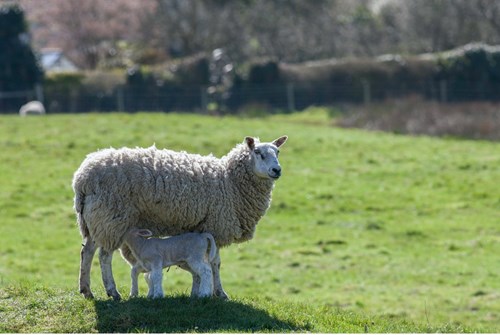
The 2026 lambing season for many producers is now in full swing with young lambs on the ground. Attention should now move to the lamb’s survival; ensuring careful and correct management is key to disease prevention and reducing pressures on young lambs.
Preventing disease
Colostrum is an essential element of preventing lamb mortality. Arguably the best protection for newborn lambs is from colostrum. A study carried out by AHDB showed that lambs intaking colostrum in the first 15 minutes of birth have a survival rate of 90-95% within the first 90 days of life. Colostrum is super food, providing energy, nutrients and is full of antibodies. All lambs must receive a sufficient quantity of high-quality colostrum quickly. They require 50mls per kg of bodyweight in the first two hours after birth and over the first 24 hours should consume 200ml/kg. All lambs should be checked for suckling in the first two hours.
Most lambs will suckle themselves without assistance, but this must be monitored to ensure adequate intakes. Supplementary colostrum should be provided to any lambs:
- Which have a weak suck reflex and fail to suckle enough from the ewe
- Whose dam has insufficient supply, poor teat conformation e.g. large or misshapen teats or mastitis
- That have had a difficult birth
- From multiples
The preferred source of colostrum is from the ewe. If any ewe has excess colostrum this can be milked out. Other options include powered substitutes and cow’s colostrum. Johne’s can be transmitted through milk, so ensure the colostrum is sourced from a Johne’s free herd, if using cow colostrum.
Hygiene
Good hygiene is key for keeping disease levels low, particularly in indoor lambing situations. Bacteria which build up in the environment contribute to neonatal lamb losses by causing diseases like watery mouth, navel ill and joint ill. Sheds should be washed and disinfected before housing and lambing pens disinfected between use. Bacteria can build up during the lambing period and survive and spread in moist conditions, so ensure that bedding is clean, dry and plentiful. All equipment including feed and water buckets should be hygienic. Isolating sick animals and disposing of afterbirths, helps to create a clean environment for the lambs which plays a major role in reducing mortality from disease.
Dipping lamb’s navels immediately after birth with iodine solution also helps to prevent bacteria in the environment from infecting the lambs through their navel. It should be repeated after two to four hours and then daily until the navel is dry.
It also important not to overlook farmer hygiene in the lambing shed, using sterile gloves, clean overalls and washing hands regularly with disinfectant aids the prevention of disease presence.
Vaccination
Disease pressures don’t just live in the shed, although the risk factor reduces out of the shed environment it certainly doesn’t disappear. Like many things, prevention is better than cure. Vaccination against clostridial diseases is considered the next step in offering lambs’ immunity after colostrum. There is a large selection of vaccines on the market, and it is advisable to discuss with your farm vet the best fit for your flock. Although vaccines are an added cost, they provide additional protection. The average cost per head to vaccinate a lamb is around£1.20 and £2. Reducing mortality rates by a few percent and saving two to three lambs, quickly justifies the decision financially.
Parasite prevention
As the lambs grow, their intakes of grass begin to increase and at around four to six weeks we see the biggest transition from a predominant milk diet to a grass diet, usually around late April/early May. In Scotland, nematodirus cases are often found in May, this follows the weather, as well an increased intake of grass by lambs (often six to eight weeks of age). The first sign of nematodirus in lambs is often sudden death.
Checking the Sustainable Control of Parasites in Sheep (SCOPS) nematodirus forecast regularly can help identify the high-risk periods. Like with diseases, prevention is key as this worm lays dormant in pastures. Fields grazed by ewes and lambs the year before are most susceptible. To reduce the risk of lambs developing a worm burden they should be turned out on the cleanest pastures possible.
There are many prevention methods for most parasite pressures on lambs, regular faecal egg testing helps to get a picture of worm burdens in the lambs and can aid the decision on whether a drench is required. These tests can be done in many ways, this can be via the farm’s vet, animal health provider or using on-farm tests such as FEC PAK. Not only does this help spot burdens early and reduce the effects on the lambs, but it also aids in the reduction in drench resistance. If a drench is considered the producer should be in regular contact with their vet and seek advice tailored to them.
Top tips
- Colostrum – Ensure lambs receive adequate colostrum. Think the 3 Qs – quality, quantity, quickly. 50ml/kg of liveweight in the first few hours and 200ml/kg of liveweight in the first 24 hours.
- Hygiene – Cleanliness is one of the best barriers against disease and the spread of bacteria think of it as removing bacteria’s breeding ground. Clean sheds, bedding & farmer will aid in reducing disease prevalence.
- Vaccination – Alongside your farm vet discuss vaccines as part of your flock’s health plan to ensure the vaccination protocol best suits your system.
- Faecal egg counts – regular dung sampling helps keep an eye on parasite burdens and helps you act fast to reduce the burden on the lambs but also reduces unnecessary drenching, essential for both resistance and profitability.
- Pasture management – Where possible, planning ahead for resting pastures and turning out onto clean pastures will aid in reducing the chances of parasite issues.
Jamie Houstoun, Agricultural Technician, Jamie.Houstoun@sac.co.uk
Posted by SAC Consulting on 11/03/2026
