

Crop updates: May 2026
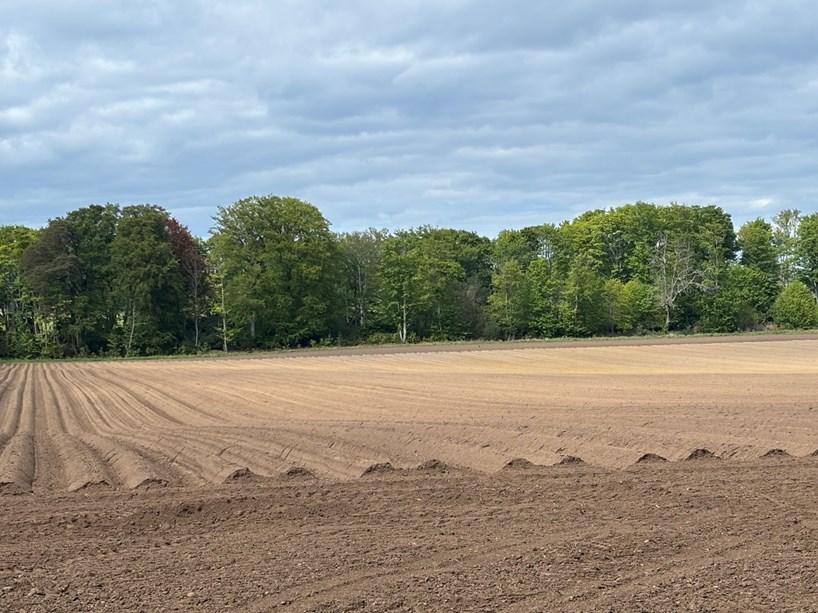
Our regular round up of the issues affecting crops around Scotland, summarises how crops are developing and what weather and other issues are affecting them. The update provides information on the progress with key field work activities as well as news on the pest, weed and disease problems being noted in crops. The health issues being seen in crops are a key part of the topical update and lets growers and agronomists adjust management practices appropriately.
08 May 2026
General Comments
A fair degree of positivity reported from around the regions. Growers in those areas previously held up by rains through early April have completed drilling and the earlier drilled spring cereals appear to have left the starting gates running and commenced tillering achieving good ground cover for the time of year. Early infections of yellow rust appear to have been successfully treated but pressure remains high and it has been noted that septoria is visibly progressing higher up the plant. Winter cereals have certainly shifted through the growth stages over the last fortnight albeit crops may well be just that bit shorter compared to last year. Potato planting has progressed at pace too, as is carrot harvesting. First silages are off and a return to warmer weather over the coming weeks will do much for grazing leys and silage aftermaths.
Regional Comments
ORKNEY
Thankfully very little rain has fallen over the last fortnight which has allowed a flurry of activity in the fields. The vast majority of the spring barley has been sown with some crops now breaking the soil surface. Temperatures remain cool which is not helping the shortage of grass apparent throughout the county. Very few cattle have been turned out and leatherjacket damage is visible in some grass fields.
CAITHNESS
A much improved period in terms of weather as temperatures rose as the spring sowing in the area came to an end. Whilst the March sown crop was slow to appear, later sown crop has had a great start. Grass is also much improved after a slow start in April. Winter crop got a real boost with the warmer climate. Cattle are starting to be turned out as grass growth improves.
MORAY
After a period of fairly settled weather, producer concerns are that it is getting too dry again, although not as bad as last year. Spring barley crops range from just emerged to mid tillering with most farms having been sown by now but there is still the odd field here and there to go in. Awns are fully out in winter barley which is looking very well mainly and has received T2 chemical applications. Winter oilseed rape is in full flower. Winter wheat crops have entered stem elongation stages (32-35). Septoria can easily be found in most crops but is confined to lower leaves of the plants and there is the odd bit of mildew present. Potato planting operations are in full swing now and grass growth has started to pick up now after a slow start.
INVERNESS
Over the past two weeks, the weather around the Black Isle has been changeable starting off cool and damp with frequent light rain, and breezy conditions, before gradually improving to sunny, dry, warm days. Daytime temperatures ranged from 10 early on to around 17–20 toward the afternoon, while nights stayed cool at roughly 3–7, with a few colder dips. The winter crops are looking healthy and continuing to develop well into the later growth stages now. Winter OSR is now flowering with around 50% of flowers out and in the winter barley the awns are beginning to emerge. Winter wheat is also looking good with the flag leaf just beginning to emerge too. There are no disease or weeds currently present in any of the winter crops. Spring crops are now well established with spring barley in the early growth stages. The forecast for the next 2 weeks is slightly unsettled, with frequent showers and sunny intervals. Temperatures are cool early in the morning but reaching 9-13 degrees throughout the day with what looks to be a warmer spell arriving towards the end of the 2 weeks.
ABERDEENSHIRE
We’ve entered May with some showery weather and cold winds, but the last week in April was warm and growthy seeing crops and grass take a jump. Most spring barley crops are now well emerged, with a range of stages from just newly emerged to tillering. A weed flush can also be seen on the earlier sown crops now too. Winter barley crops are at booting with T2 sprays getting applied. Rhynchosporium can be seen in some crops. Winter wheats are also starting to thicken out now as most crops are between T1 and T2, with some early sown crops at flag leaf emerging stage (GS37). Despite fears of yellow rust earlier, none has been seen at present and most crops will have some level of protection following T1 sprays. Oilseed rapes are in full flower, with a lot of good even flowering crops seen in the area. At present disease levels appear low, but if May is to be showery two flowering sprays maybe justified to keep sclerotinia low. Tattie ground is being prepared for planting now and cattle are seen to be being put out to grass.
BANFF & BUCHAN
The mostly dry weather means sowing of spring crops is all but complete in the area and potato planting has also made great progress over the past few weeks. Later sown spring barleys have quickly come through the ground and caught up on earlier sown fields which seemed to take an eternity to emerge. The countryside is now a patchwork of browns, greens and yellow with oilseed rape coming into full flower over the past couple of weeks with mid flower sprays not too far away. Winter barleys are racing though the growth stages with many crops now booting and T2 sprays just around the corner. It is noticeable however that within fields there can be considerable variability in terms of growth stage. Winter Wheats have had their T1’s and are also starting to stretch. Farmers are also grappling with the new EFA guidance with farmers utilising the increased flexibility including the establishment herbal leys to looking at green cover options for the first time. Grass remains slow to grow although fields are filling up with cattle and sheep.
KINCARDINESHIRE
A settled spell of weather and a bit of heat have let crops progress at pace over the last few weeks. Winter Oilseed rape is in mid flower with little petal fall so far. Winter barley has flag leaf out and awns peeping in some crops. There are signs of rynchosporium in the bottom of the crop which should be controlled with T2 fungicide. Winter wheat in the area is looking really well with good colour and low disease levels. Spring barley has emerged well. Some fields could do with some rain. Potato planting is happening at pace in good ground conditions. Grass is growing and cattle have been turned out.
FORFAR
Spring crops are now well emerged with herbicides and trace elements being applied. WOSR is at full flower with mid flower sprays being applied. Winter cereals are now well through stem extension and some flag leaves are beginning to emerge. Potato planting is now well advanced into good conditions although overnight frosts are keeping soil temperatures down.
PERTHSHIRE
The last of the spring cereals have been drilled in the last few days with crops ranging from new sown through to early tillering and generally looking well. Winter oilseed rape is approaching full flower and receiving fungicides for sclerotinia protection. Winter wheats are steadily moving through growth stages with most advanced at flag tip but mostly at stem extension. Yellow rust and septoria pressure remains high and a robust fungicide program is required. Winter barley is now at flag leaf peeping and quite a few crops are showing signs of BYDV this year.
FIFE
Spring cereals are approaching the finish of seeding. Warmer soils are bringing the later sown fields through the ground quickly. The most forward spring barleys are now at GS23, with a lot of weeds germinated too. Winter barleys are now at awns peeping so thoughts are turning to T2 fungicide applications and final weed tidy-up. Winter wheats are growing away towards GS37, some fields have septoria higher up the plant than hoped for, mostly where T1 timing was delayed by weather. WOSR is approaching mid-flowering time for anti-sclerotinia applications, crops look well with good numbers of bees seen within crops.
STIRLINGSHIRE
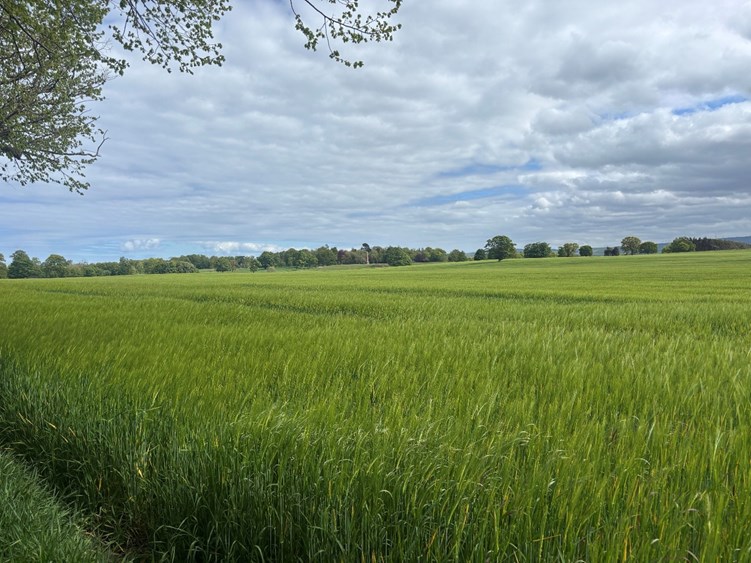
After a slow, damp start to spring, the past fortnight has brought a welcome spell of settled weather, allowing the vast majority of spring crops to be sown. The improved conditions have also enabled the first silage cuts of the season, with most livestock now turned back out to grass following the winter. Overall, crops are looking well and progressing steadily through their growth stages. Some winter barley crops are now reaching ear emergence, while the flag leaf is just visible in winter wheat and winter oat crops. Rhynchosporium is beginning to show in some winter barley, and septoria tritici pressure is increasing in certain winter wheat fields. Oilseed rape is now moving into pod development and is looking particularly clean.
LOTHIANS
The weather has in general been kind through April albeit perhaps, for the majority, slightly drier than optimal. Overall, soils retained sufficient moisture for a good even emergence of spring sown cereals and pre-emergence herbicides are working well. Soil temperatures are however slow to warm and certainly early mornings are feeling noticeable chilly still. Livestock farmers would have hoped for a little more grass ahead of them at this time of year and while the very first silages have been taken, graziers would certainly welcome a warmer May to bulk up stocks. Winter cereals have advanced rapidly through the growth stages; wheats have leaf 2 emerged and the most forward have the flag leaf emerging, whilst winter barleys are well into booting and awns emerging.
BORDERS
Overall, crops are progressing steadily, with 11.4mm of rainfall recorded over the past two weeks. While this is below average, conditions have remained favourable, allowing crops to move through growth stages without significant stress. Spring barley is beginning to tiller, with crops looking even and well established overall. Winter barley has awns peeping, marking the transition into early heading. Winter wheat is now at flag leaf stage, with focus shifting to protecting the upper canopy. There is a presence of foliar disease which will continue to be monitored. Oilseed Rape is well into flowering, with crops beginning to move towards the end of flowering. Rainfall over the coming weeks will be important to support grain fill and maximise yield potential across all crops.
AYRSHIRE
What a difference a fortnight can make! This last week has been particularly good in Ayrshire and has really pushed things on. Many farmers are out cultivating for spring crop, with some of the earliest sown spring crop through the ground and in seedling growth (GS11). Elsewhere, the winter barley has also got a move on too and is comfortably in stem elongation (GS33). Some silage being cut and lifted this week too, just in time for Ayr Show this coming weekend.
Posted by SRUC on 13/05/2026
