

Crop updates: July 2026
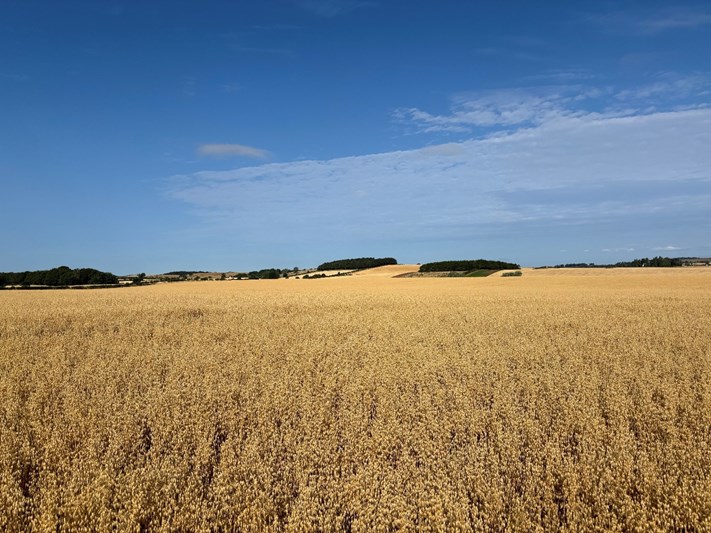
Our regular round up of the issues affecting crops around Scotland, summarises how crops are developing and what weather and other issues are affecting them. The update provides information on the progress with key field work activities as well as news on the pest, weed and disease problems being noted in crops. The health issues being seen in crops are a key part of the topical update and lets growers and agronomists adjust management practices appropriately.
17 July 2026
General Comments
With winter barley harvest underway, and the hot dry days bringing other crops towards harvest, check each crops evenness, weed burden and market contracts before applying any pre-harvest glyphosate. While waiting for the crops to ripen and the weather window to appear, thoughts should turn to varieties of WOSR, winter barley and winter wheat for 2027 harvest, contact your seed suppliers early to avoid delays in delivery.
Regional Comments
ORKNEY
The weather has been quite unsettled since the last report with frequent and sometimes heavy rainfall making ground conditions soft. Silage making has been hampered, with tracking in fields clearly evident. Growing conditions have however been good as there is an abundance of grass and the spring barley ear emergence is almost complete.
CAITHNESS
A mixed bag of weather in the period with plenty moisture at the start but excellent temperatures the last few days. Spring crop has really been given a boost. At the same time last year some winter crop had been harvested and baled whereas this year it is only being sprayed off this week. Silage and hay making has continued apace with yields generally being very good across the area.
INVERNESS
Over the past two weeks, weather around Inverness has been generally favourable for crop growth, with warm, dry spells and occasional rainfall. Temperatures have mostly been in the high teens to low twenties. Two recent thunderstorms brought heavy rainfall, causing some crops in the area to become lodged. Overall, conditions have remained favourable for crop development. The winter crops are progressing well. Winter barley is now well through the ripening stages, with most crops having turned golden and the ears beginning to droop. Harvest of the feed barley is expected to begin later this week, with crops being cut at a slightly higher moisture content of around 16–18% to reduce dust during bruising. Winter oilseed rape remains at the stage where the seeds are fully green. Winter wheat is performing well, with the grain at the milk development stage. However, there has been some scorching of the flag leaves following the recent warm and dry weather. Spring barley is progressing well overall, although the later sown crops remain slightly behind the earlier drilled fields. The most advanced crops are now at the soft dough stage, while the later sown fields are at mid-ear emergence, with approximately half of the ear emerged. Recent warm temperatures and timely rainfall have continued to support crop growth and grain development across all growth stages. Over the next two weeks, the weather around Inverness is expected to become warmer and more settled, with plenty of dry weather and sunny spells, although there remains a small risk of isolated showers. Temperatures are forecast to reach the low to mid-20s, which should encourage ripening of the winter crops, support grain fill in the spring barley and provide favourable conditions for harvesting the winter barley.
ABERDEENSHIRE
We’re blessed with a week of sunshine, but thankfully cooler than areas down south due to an easterly wind blowing harr and cloud cover over the area sometimes. Winter barley crops are getting desiccated (if not already done) and some early crops of winter rape are getting desiccated too. Spring barley is at milky ripe with some early crops at early dough stage, as the heads start to change colour. Tattie crops are in full leaf, and inspections are in full progress.
Livestock farmers are busy making hay and silage taking advantage of the sunny week
BANFF & BUCHAN
The summer continues to see lots of sun and lots of warmth as well as a decent amount of rain to keep things going. Winter barleys are being sprayed off, and the first combines should start rolling this week which is much earlier than normal. Winter barleys look to have filled out well and hopefully will live up to their potential. Oilseed rapes are starting to change colour and will soon be ready for the swather (with Buchan seemingly being the last bastion of this machine!) although there are several growers who will desiccate their crops. Winter wheats are also changing colour and, in some cases, will be ready before spring barleys. Spring crops are also looking well although there are some areas of barley fields starting to lodge, mainly double dosed areas and under trees but concerning nonetheless with harvest still a while away. Potatoes are being rogued and are mostly coming into flower. Grass continues to be plentiful with bumper yields of silage being harvested. The new EFA rules means that growers have had to sow different mixes for fallow or as herbal leys. These along with green manures from AECS are coming into flower, with the countryside now containing various shades of blue, yellow and white flowers to go with the yellow and green crops and grasses.
FORFAR
Crops are turning rapidly now with little in the way of moisture along with sunshine and an accompanying breeze providing perfect conditions to ripen crops. Winter barley is almost ready to cut, and oilseed rape has mostly been sprayed off and 10 days away from combining. Winter wheat and spring barley are also turning colour with the scene setting for a quick harvest with not much in the way of a gap between crops.
PERTHSHIRE
Winter oilseed rape has mostly received glyphosate and waiting for the withdrawal period to pass, the first winter barley has been cut in the area and most other crops look as if they will follow in the next week or so. Spring barley and winter wheat crops are changing colour with lighter areas of the fields now showing up.
FIFE
Some very warm dry weather over the last couple of weeks has ripened winter barley crops, the first of which have started to be harvested over the weekend of 15th July. Early WOSR fields have been sprayed off but most are just approaching the correct stage for glyphosate and PodStick. Winter oats are ripening off quickly and spring barley and wheat are starting to turn and currently look well. The weather looks a bit more settled for the rest of this week with some warm temperatures and light winds, which will help make the large amounts of hay lying cut. Potato and vegetable fields have irrigators applying water everywhere you look, some overnight rain showers would be of help to replenish river levels and help grain fill.
STIRLINGSHIRE
As Stirling feels the heat and with no rain forecast for the foreseeable, most of the timothy hay on the Carse has been cut with a good proportion also baled. Winter barley is coming along well with the grain hard enough to no longer be dented by a fingernail. If this sunny weather keeps up, harvest shouldn’t be too far away. Spring barley has caught up to winter wheat and winter oat crops, with all three now at the soft dough stage. Oilseed rape has also advanced well. The seeds are now fully black, all the leaves have died off, and although the stems remain mostly green, the crop is continuing to ripen steadily.
LOTHIANS
Most areas across the region will have seen less than 10-12mm rain this month as the high-pressure systems continue to influence the weather. The outlook too, remains dry. Daytime temperatures have moderated slightly which will help reduce crop stress, but some crops are already displaying lack of moisture symptoms especially where rooting has been sub-optimal on tighter soils. The earliest winter barleys are cut, winter oats are turning fast, and winter wheat grains are typically at cheesy ripe stage (GS80). Oilseed rapes were desiccated earlier in the month and still a few weeks away from cutting. Beans are holding on to green leaf well, some rust is starting to appear with the hot weather, more so than chocolate spot, and there are some particularly tall winter sown crops around that have podded up well.
LANARKSHIRE
The recent spell of warm, settled weather has provided a welcome opportunity for many to make significant progress with fieldwork. Sprayers have been busy catching up on crop protection, silage has been harvested under excellent conditions, and crops have responded well, with many spring cereals now reaching the flowering stage. Crops across the board are looking healthy. Many farmers have also taken the opportunity to prepare ground for grass reseeds, with ploughs spotted working across the district. The favourable conditions have also enabled hay and haylage to be made in recent weeks, allowing many to make the most of this extended spell of dry weather.
AYRSHIRE
This fortnight has been a real mixed bag, but the last few days have really begun to heat up again, with several clients reporting cutting and lifting silage. On the crops front, the winter wheat is approaching GS85 and developing a soft dough, whereas the spring barley is in the early stages of milk development (GS71-73). Both crops seem to be in good overall condition; however, the warm weather has caused a lot of weed species to also grow and consequently the field margins look very wild. Some barley fields have some volunteer wheat growing, but the issue is not widespread. Some farmers will be awaiting the passing of the 15th of July date so they can get their fallow cut without falling foul of greening requirements.
STRANRAER
Harvest has started for some winter barleys with many hoping the weather holds out for a bit longer. Spring barleys which have been under sown are ripening quickly and many will plan to harvest arable silages in the next week. After a dry and hot 10 days many areas with shallower soils will be starting to burn off. Grass growth has slowed up due to the lack of rainfall, but silage cuts have been pleasing and harvesting conditions excellent. Caterpillars have hit the forage brassica crops causing significant damage. Fodder beet crops are loving the current weather and look promising.
Posted by SRUC on 22/07/2026
