

Meeting EFA Requirements with Autumn Sown Green Covers
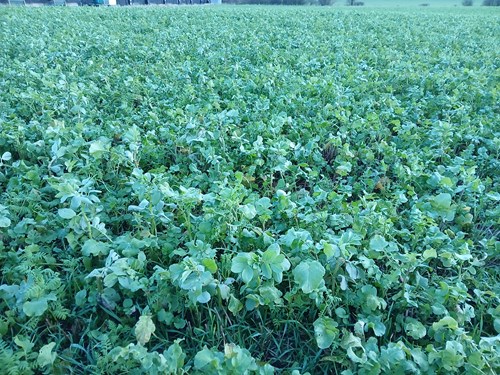
Sowing a cover crop post-harvest is undertaken by relatively few growers at present. Generally, it is used to provide additional autumn/winter forage for livestock (e.g. stubble turnips), or as a method to improve soil structure and fertility.
This autumn, however, an increase in the number of growers sowing green cover crops is expected. Firstly, this is due to more livestock farmers requiring Ecological Focus Areas (EFAs) under Enhanced Greening following the removal of the 75% grassland exemption. Secondly, beneficial changes have been made to EFA green cover guidance, introduced this year. These include:
- An increase in the number of species that can now be included in cover crop mix. New additions: alsike clover, crimson clover, persian clover, buckwheat, kale, stubble turnip, forage rape, winter beans.
- The removal of the restriction on grazing before 31 December.
The requirement continues to be to establish a green cover consisting of two or more of the following crops as the predominant crops: The full list, in alphabetical order, is:

There are limits to the amount of biomass and benefit an autumn sown cover can achieve. Earliness of sowing is key, especially if there are small seeds in your chosen mixture. Ideally sow by the end of August. If you are later than the first week in September, ensure your predominant species is a large seed which has the supply of energy to get the plant well established.
Soil moisture is another limiting factor. The early harvest in 2025 provided an ideal opportunity for establishment; however, for some growers, dry ground and a lack of rainfall meant this opportunity did not materialise.
Available soil nitrogen is another potentially limiting factor. If the land is under continuous arable cropping with no additions of organic manures, then the nitrogen available to boost growth will be low. Applying 30kg nitrogen will make a significant difference to the potential biomass, however if you are in a Nitrate Vulnerable Zone (NVZ) this needs to be applied in August. Weather conditions will dictate whether N applications are viable in late summer and autumn, preparation of an nutrient management plan can help with ensuring seeds go into the best fertility giving the crop the greatest chance of fast establishment.
The question of what to sow depends on the benefits you are trying to achieve. If non-EFA for livestock, then stubble turnips and westerwolds are a good fast growing option. After the stubble turnips are grazed, and in good ground conditions the grass will continue to regrow right through to the spring as it is frost hardy. This provides valuable protection for the soil over winter and mops up any nitrogen but can also be a bonus early bite of grass in the spring. If it’s for EFA, then replace the westerwolds with a cereal or vigorous growing black oat. If you are grazing with sheep, it’s worth noting sheep will preferentially graze barley and rye before oats. The inclusion of clover should only be done if early sown and only sow annual or red clover rather than white clover. Annual species such as crimson clover is a common choice but also consider balansa which is more vigorous and less susceptible to frost. If you are considering including vetch, make sure it is hairy vetch as it is much more frost resistant.
Be aware of unintended consequences. Mustard establishes quickly, but it will also multiply clubroot levels in your soil, so leave out if you have winter brassicas such oilseed rape or swedes in your rotation. Buckwheat is included in the list and grows well in spring summer sown mixtures, but it contains photosensitive compounds so do not include if you plan to graze with stock. Other health conditions relate to the fact that the biomass. A highly fermentable low dry matter material which can give rise to twisted gut. Lambs should be introduced gradually and be double or triple vaccinated against Pasteurella and clostridial diseases. Brassicas also present risks of nitrite poisoning, haemolytic anaemia (SMCO), and goitrogens leading to iodine deficiency. Having a grass runback which allows a gradual introduction to the cover is a useful grazing management tool.
If sowing for soil health benefits, then the inclusion of multiple species is the goal (three or more, ideally five) to exploit the synergies that can arise with the soil microflora. Different plant species also provide a range of root architecture. For example, many plants root to 10cm, but phacelia, radish, linseed, vetch and buckwheat will reach 20cm in the autumn and 30cm when sown in the spring or summer. If your intention is to benefit soil mycorrhiza fungus then don’t sow a brassica because they cannot associate with brassicas.
Finally, keep an eye on the costs. You have seed, cultivation and possible fertiliser costs to consider. Seed costs can quickly increase above £100/ha when going for a multispecies mixture. Make sure the species in the mix are appropriate for Scottish growing conditions and do not die with the first touch of frost and be prepared to adjust your mix if sowing is delayed into September.
Five Top Tips
- Refer to the updated 2026 guidance for EFA options which can be found on the Rural Payments website.
- Green cover EFA option requires you to establish a green cover consisting of two or more crops as the predominant crops.
- Consider crop options carefully. Be aware of limiting factors such as soil moisture and nitrogen.
- Ensure that the mix is appropriate for frost.
- For advice and help with green cover crops, get in touch with your local consultant.
Useful Links
- www.fas.scot/downloads/greening-checklist-for-2026-ecological-focus-areas
- www.fas.scot/downloads/greening-key-dates-2026
Donald Dunbar, Principal Consultant, Donald.Dunbar@sac.co.uk
Posted by SAC Consulting on 16/02/2026
