

Crop updates: late April 2026
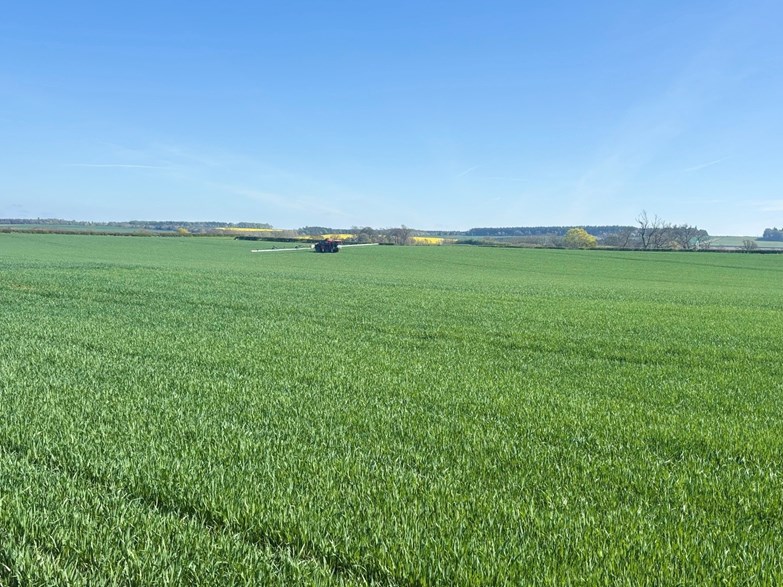
Our regular round up of the issues affecting crops around Scotland, summarises how crops are developing and what weather and other issues are affecting them. The update provides information on the progress with key field work activities as well as news on the pest, weed and disease problems being noted in crops. The health issues being seen in crops are a key part of the topical update and lets growers and agronomists adjust management practices appropriately.
24 April 2026
General Comments
Spring work has been a stop start process in the east and central areas of Scotland. Cereal sowing is drawing to a close, but potato and field vegetable plantings are in full swing. Pre-emergence weed control has had the best soil conditions for effectiveness this spring... if the wind and rain has allowed application! Options for pre and post emergence weed control are discussed later in this issue, as are T1 fungicide and growth regulator options for winter cereals. Hopefully as we move into May the weather will warm up and allow crops to grow to their full potential.
Regional Comments
ORKNEY
With nearly ¾ of the month gone, ground conditions remain cold, wet and as a result very little spring barley has been sown. Compared to last year, work is approximately 3 weeks behind. A string of dry days and some long hours in the tractor is needed to get things back on track but thankfully the weather forecast is looking promising. Grass is only beginning to come back to life having endured some tough winter conditions. The relentless south easterly gales and resultant salt spray during January burnt most of it off. Greylag geese also took their share. Lambs are beginning to appear in fields, but the site of grazing cattle seems a long while off.
CAITHNESS
Fuel costs have abated slightly whilst the delivery issues in the area have also eased. The earlier sown spring crop is now through the ground whilst there are still considerable amounts of acres to be sown, not helped by a lot of localised rainfall. Temperatures have certainly risen in the final part of the period which is starting to give crop and grass growth a boost. Fertiliser costs are also having a telling effect on growers with some opting to reduce acreage sown. Winter crops have been given a boost with the upsurge in temperature. As previously fodder is still in high demand with most cattle still housed in the area.
INVERNESS
Over the past two weeks, the weather has been very changeable generally cool and quite showery. Daytime temperatures have been around 10–16°C, dropping to 3–8°C overnight, with a fair amount of wind throughout. Overall, there have been frequent scattered showers that clear quickly, with windy spells helping to dry conditions afterwards. Cooler than recent weeks but not freezing.
BANFF & BUCHAN
Spring barley sowing continues although most areas entering the home straight. Barley has been slow to come through the ground due to the cold although regular showers mean pre-emergence sprays have a good chance of effectiveness. Winter oilseed rape is almost flowering, and winter barley is now starting to race through the growth stages. Winter wheats are now beginning to make up ground and receiving their T1s. Crops overall are looking well, with the heavy snow in January and following month of heavy rain seemingly not having too big an effect. Potato growers are proceeding with planting although soils look cold. Fertiliser prices and availability continue to be a major topic of conversation with concerns being raised over supply for autumn sowing already. Grass is slow to grow although ewes and lambs are appearing in fields along with cattle.
FORFAR
Cool weather means crops are progressing through growth stages steadily rather than romping ahead. Disease pressure remains high this season with yellow rust and septoria being the main issue in wheat and rynchosporium and BYDV damage causing issues in winter barley. However, weather conditions are allowing most to keep up to date with the fungicide program which is keeping diseases under control. Spring barley drilling is almost complete in the area but there are a field yet to be drilled. The earliest sown spring barleys are now at the 3-leaf stage with herbicides and manganese planned to be applied soon.
PERTHSHIRE
Winter oilseed rape is coming into flower and awaiting flowering fungicides, winter barley is well into stem extension, winter wheats are approaching GS 31 and the T1 fungicide timing in which more focus will be put on yellow rust management. The West of the area has been much wetter than the East and spring barley drilling has only really commenced in the last week or so with a fair bit still to go in.
FIFE
Spring work, on the cereal front, is drawing to a close but has been progressing in fits and starts due to April showers (some very heavy). Spring beans and the first sown spring barleys are emerging, and later sown barley and oat fields have well-made seed beds. WB and WW have had, or are about to have, T1 fungicides and growth regulators though weeds seem slow to emerge so weed control will be applied later. Vegetable and potato planting is in full swing with large fleets of machinery seen converting ploughed fields to tidy planted potato drills. Some warm weather would be welcome to warm soils and accelerate crop growth.
LOTHIANS
Three weeks into April and soils are drying with only occasional showers. Nighttime temperatures frequently drop below 5 degrees with daytime highs of 10-14 degrees. Most areas will have had in the region of 30mm rain so far this month. Spring cereals have therefore emerged quickly and are off to a good start. The spread of drilling through the autumn has given rise to a notable variation in cereal spring growth stages; forward wheats will fast be approaching GS32 whilst the majority are at GS 30-31. Yellow rust is being found in more wheat crops and is more concerning than septoria, at the moment. Winter barley has picked up considerably on the back of first nitrogen applications. Grass growth is, at best, steady, invariably checked by the continuing colder nights. Oilseed rape crops are enjoying what could be another prolonged flowering period through this drier spell.
AYRSHIRE
The last fortnight has been a real struggle, it feels like for every two good days we get four downpours, but dare I say it, we might just be on the cusp of spring, as things dry up a little and we start feeling some heat. The winter barley around Prestwick is now entering stem elongation, at around growth stage 30, though the first nodes are not detectable yet. Other winter barley fields in the area are in the latter stages of tillering and not far behind. Some more rhynchosporium has been recorded, possibly made worse by the poor spring. As with the last report, more farmers are getting in touch to get a grip on the new greening requirements, with low input grassland being particularly popular in the area.
Posted by SRUC on 29/04/2026
