

Ovine Abortion in Scotland: 2025 Review and Key Considerations for 2026
As we enter the 2026 lambing season, recent diagnostic data from Scotland highlight ongoing trends and emerging concerns in ovine abortion. Enzootic abortion of ewes (EAE, Chlamydia abortus) continues to dominate diagnoses, while a notable resurgence of Schmallenberg virus (SBV) has been observed.
Latest Diagnostic Trends (2025 Data)
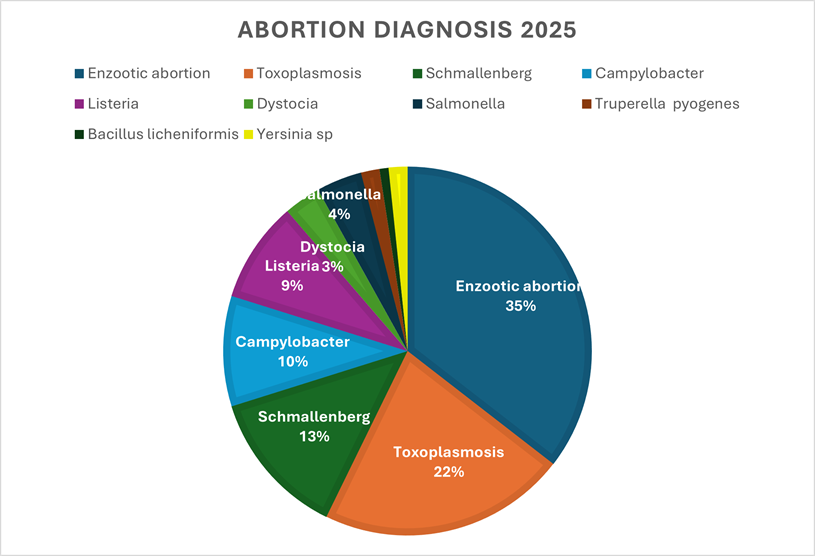
- Enzootic abortion (EAE) remains the leading cause of abortion, accounting for 35% of confirmed cases.
- Toxoplasmosis follows at 22%.
- Schmallenberg virus (SBV) rose sharply to 13%, marking a significant increase compared to the previous four years.
- Other commonly diagnosed agents include Campylobacter, Listeria, Salmonella, and T. pyogenes.
The first confirmed SBV fetopathy for the 2026 lambing season was detected in January in Aberdeenshire, suggesting early lambing flocks may be at particular risk this year.
Understanding the SBV Upsurge
The 2025 increase is likely linked to:
- Reduced population immunity, allowing SBV to re‑emerge cyclically.
- Climate‑driven midge activity, influencing viral transmission.
Animals exposed during 2024/25 should retain protective antibody levels for several years, but naïve replacements create ongoing susceptibility.
Long-Term Patterns (2020–2025)
Across five years of submissions to SRUC, the most consistent causes of abortion have been:
- EAE
- Toxoplasmosis
- Campylobacter spp.
This reinforces the need for robust vaccination, biosecurity, and flock‑level risk management.
Sampling: Critical to Effective Diagnosis
A diagnostic investigation is strongly recommended when abortion rates exceed 2%.
Essential Samples
To enable full routine testing, submit:
- Foetal stomach contents
- Foetal fluids
- Placenta.
If fetuses/placenta cannot be submitted intact, these samples provide the best alternative.
Additional Samples (case‑dependent)
- Spleen
- Thyroid
- Umbilicus
- Brain
- Fixed tissues: placenta, liver, lung, heart, brain.
⚠️ Please avoid posting large volumes of formalin.
When Not to Sample
- Mummified fetuses rarely yield a diagnosis; sampling is normally poor value.
- Histopathology is often unhelpful if autolysis is advanced or placenta is missing; additional fresh submissions are usually more diagnostic during ongoing outbreaks.
Providing detailed clinical history markedly improves the value of any investigation.
SBV: Practical Diagnostic Notes
Clinical indicators
- Arthrogryposis, fixed joints, spinal curvature
- Hydranencephaly
- Neurological deficits in otherwise normal lambs: blindness, ataxia, inability to suck.
Recommended Samples
If the whole carcass cannot be submitted:
- Umbilical tissue (1 cm³) in VTM
- Foetal or hair‑coat fluids
- Samples may be frozen and tested retrospectively
- Photographs of affected lambs are extremely useful
- Maternal serology can support diagnosis.
Useful Resources:
Posted by SRUC Veterinary Services on 25/02/2026
