

Low Energy Silage in 2025: What It Means for Herd and Flock Performance
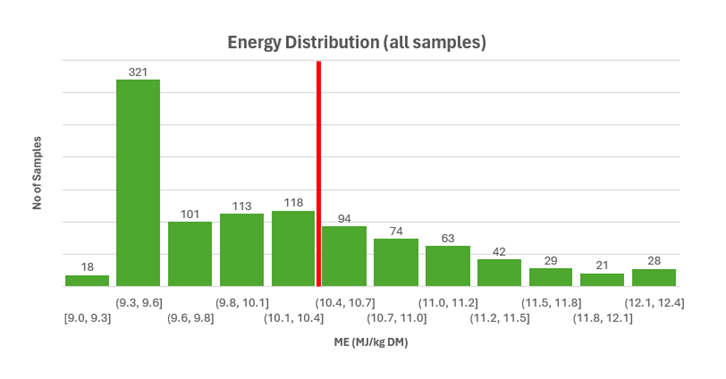
Results from over 1,000 new-season silage samples across Scotland are highlighting a significant nutritional challenge for the year ahead. Data compiled by SAC Consulting from 1,022 silage submissions in 2025 shows a widespread reduction in metabolisable energy (ME), with important implications for both cattle and sheep enterprises.
For vets and farmers alike, this season’s forage quality increases the importance of forage testing, ration planning, and metabolic profiling before calving and lambing.
Silage Analysis: Key Findings from 2025
The headline concern is low energy density:
- 65.5% of silage samples tested at 10.4 MJ ME/kg DM or lower
- Average ME across all samples: 10.1 MJ/kg DM
- Big bale silage recorded the lowest average ME at 10.0 MJ/kg DM
- Average dry matter increased to 39.1% following a dry spring
- Average protein rose slightly to 12.2%
- Significant variation exists between individual forages.
While protein levels are slightly improved compared with last year, energy — not protein — is likely to be the primary limiting factor in many rations this winter.
Why Are Levels Lower This Year?
The dry spring accelerated grass maturity and crop development. As grasses mature, fibre increases and digestibility falls — resulting in lower energy content at harvest. Many crops reached cutting stage earlier than expected, and where harvest timing lagged, energy values dropped further.
This creates a situation where forage bulk may look acceptable, but nutritional value — especially energy — is insufficient for high-demand animals.
Why This Matters: Performance and Health Risks
Low dietary energy affects:
- Late gestation performance
- Colostrum quality and yield
- Neonatal survival
- Early growth rates
- Metabolic disease risk
- Fertility and recovery post-calving/lambing.
If late pregnancy energy and protein requirements are not met, the consequences can extend well beyond birth — affecting both short-term survival and long-term productivity.
Energy is likely to be the first limiting nutrient in many herds and flocks this year.
Forage Testing Is Essential
Encourage farmers to analyse forage rather than rely on book values or visual assessment. Identifying low-energy silage early allows:
- Correct concentrate supplementation
- Targeted ration balancing
- Better grouping of animals by nutritional demand
- Reduced metabolic risk.
Increased Importance of Pre-Lambing and Pre-Calving Metabolic Profiling
With more low-energy forage in use, metabolic profiling before lambing and calving becomes even more valuable. Blood testing helps confirm whether current rations are meeting animal requirements and allows adjustments before clinical problems appear.
Pre-Lambing Metabolic Profiles (Ewes)
Recommended profile:
- Ewe Nutrition Profile (10 animals)
- BOHB and Urea (£50.10)
- Optional: Albumin (+£4.95 per sample).
Sampling guidelines:
- Sample 3–4 weeks before lambing
- Use red or green top tubes
- Select typical animals from twin and triplet groups
- Sample at least.
Pre-Calving Profiles
Suggested testing options:
Package option:
- Ruminant Energy/Protein Status Package
(Albumin, globulins, total protein, urea, BOHB, NEFA — £24.80) - Plus magnesium (£4.95).
Individual tests option:
- Urea, BOHB, NEFA, Magnesium (£26.00)
- Optional: Albumin (£4.95).
Sampling guidelines:
- Sample around 1 month before calving starts
- Animals should be on a stable pre-calving ration for 2–3 weeks
- Avoid sampling within 4 hours of high concentrate feeding (unless on TMR).
Key Points
- 2025 silage energy levels are widely lower than ideal
- Energy — not protein — will often be the limiting factor
- Forage analysis should be strongly encouraged
- Rations may require more supplementation than usual
- Pre-calving and pre-lambing metabolic profiling is especially valuable this year
- Early testing allows proactive correction rather than reactive treatment.
Posted by SRUC Veterinary Services on 30/01/2026
