

Woodburn Poll Dorsets
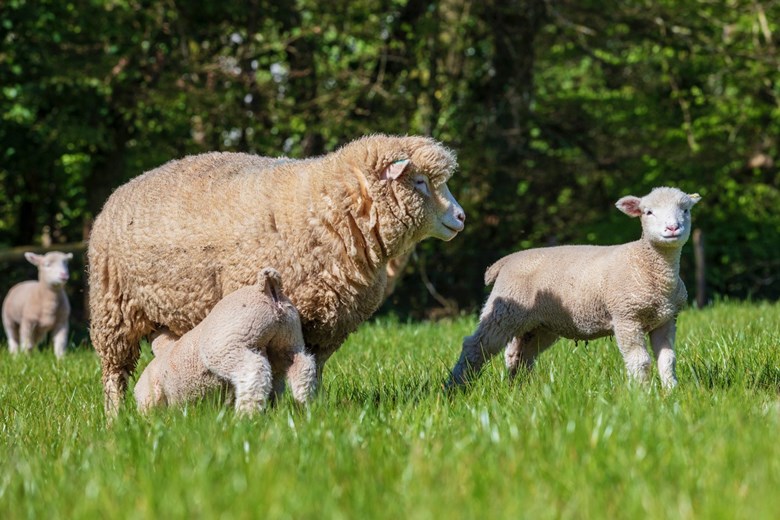
Set in 200 acres of upland pasture on the southern edge of Exmoor, Woodburn Farm is a family-run enterprise that blends pedigree sheep breeding with ambitious environmental stewardship. Though the farm has evolved significantly over the years, its core remains the same: a commitment to healthy animals and sustainable farming.
Woodburn Farm is home to the Woodburn Flock of Poll Dorsets, established in 2021 as a pedigree, performance-recorded flock. The whole family plays a part in day-to-day farming. Dave, who also works as a vet; Gemma, who juggles children and livestock; and James, the farm’s full-time support for tractor work and a wide-ranging programme of capital improvements.
While pedigree sheep production sits at the heart of the business, the family has embraced a diversified approach that brings environmental, welfare, and long-term financial benefits.
Farming for the Future
The landscape at Woodburn Farm has changed since Dave and Gemma took over. More than 12,000 trees have been planted under the English Woodland Creation Offer, while a variety of funded conservation projects have enhanced biodiversity and water quality. These include:
- new banks and hedgerows
- pond creation
- machinery and livestock tracks
- establishing herbal leys.
Last winter, the family began planting agroforestry plots, marking an important new chapter in integrating trees and grazing. They’re eager to see how this system supports soil health, shelter, and long-term productivity for sheep.
Building a High-Health, High-Performance Flock
The Woodburn Poll Dorset flock began with 170 ewe lambs from three respected flocks. From the outset, performance recording and estimated breeding values (EBVs) played a central role in breeding decisions. The results speak for themselves: rising flock averages, improved carcase quality, and a strong focus on producing robust, healthy sheep that meet breed standards.
Over time, the family has made strategic decisions to strengthen genetics and health:
- removing lower-index ewes and retaining high-performance progeny
- expanding to 250 breeding ewes
- introducing high-index rams to widen genetics
- closing the flock to reduce disease risk and using AI when needed
This careful, data-driven approach reflects a strong emphasis on long-term flock resilience.
Challenges Along the Way
Despite strict quarantine protocols when establishing the flock on “clean” grazing, foot-related lameness still found its way in. Through vaccination, regular footbathing and prompt treatment, lameness has now been reduced to very low levels. Scald in lambs remains an occasional challenge but responds quickly to formalin footbaths.
Lambing Dorsets out of season brings risks such as pregnancy toxaemia. Early on, the flock struggled with uneven ewe condition. Through selective culling and closer body condition scoring, ewe health has improved significantly. Moving lambing to September has created better grazing conditions, but also means managing high stock numbers through the wettest months.
Successes Worth Celebrating
The benefits of focused breeding and improved management are already clear:
- Faster time to slaughter
- Better carcase quality
- Minimal lameness—improving welfare and reducing labour
- Stronger overall flock performance.
These gains reflect years of careful decision-making and a commitment to continuous improvement.
High-Health Accreditation with PSGHS
Woodburn Farm joined the Pedigree Sheep & Goat Health Schemes (PSGHS) early to secure MV accreditation, essential for accessing the right breeding sales and protecting flock health. Today, health monitoring goes much further, with regular screening for:
- Johne’s
- OPA
- CLA
- Enzootic abortion
- Toxoplasma
- Fluke
- Border disease.
Alongside this, routine faecal egg counts support targeted worming and reduce anthelmintic resistance risks.
Looking Ahead
The family’s long-term goals are clear:
- Completely close the flock to minimise disease introduction
- Continue reducing lameness
- Use genomic testing alongside EBVs to guide breeding
- Improve prolificacy and scanning percentages
- Build an even more efficient, healthy, and sustainable flock.
Woodburn Farm is proof that family farming, environmental ambition and modern breeding technology can work hand in hand. With trees growing, genetics improving, and health at the forefront, the future looks bright for both the flock and the land they graze.
Posted by SRUC Veterinary Services on 24/02/2026
