

Crop updates: January 2026
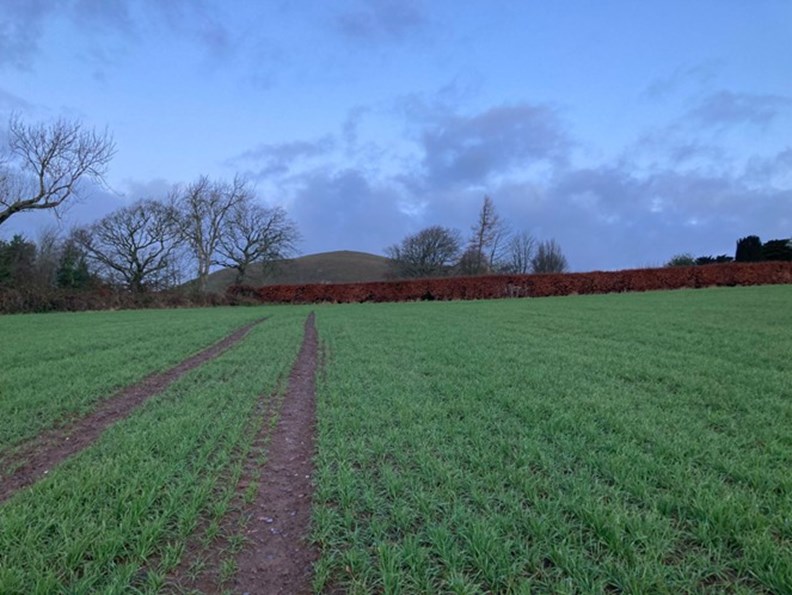
Our regular round up of the issues affecting crops around Scotland, summarises how crops are developing and what weather and other issues are affecting them. The update provides information on the progress with key field work activities as well as news on the pest, weed and disease problems being noted in crops. The health issues being seen in crops are a key part of the topical update and lets growers and agronomists adjust management practices appropriately.
16 January 2026
General Comments
Confirmation of the recent north / south weather divide is all too evident from the various regional reports this week. Snow cover appears not to have been detrimental to crops and simply provided protection from air frosts. Moreover, disruption to day-to-day operational business has evidently been more problematic. Snow melting has subsequently put field travel under pressure waterlogging soils in the affected regions. Little in the way of foliar disease reported aside from light leaf spot in rape which is not unexpected at this time of year. Slug activity has curtailed given the cold temperatures and the only pest pressure to note is arising from geese grazing cereal crops. Intentions for spring cropping choice continue to be influenced by the availability, or otherwise, of malting barley contracts, with evidence that, particularly in southern regions, more spring wheat is likely to go in the ground as an alternative crop when compared to last year.
Regional Comments
CAITHNESS
A longer than anticipated period of snowfall in the area saw ploughs and dung spreaders parked up, with snow ploughs and grain buckets being hitched on and used to clear farm tracks, streets and main roads across the area. A very good PR exercise for the farming community. Fodder stocks still seem to be good, but the recent cold snap will no doubt have increased use across the area. Straw still seems to be plentiful.
MORAY
Like many parts of Northeast Scotland, autumn sown crops have been tucked up under a blanket of snow for the first ten days of the year. After a fairly rapid thaw, it’s now back to a crisp frost but cereal plants look to be none the worse and fields look dry and clean on the whole. Winter oilseed rape crops are also looking fine although there is a reasonable amount of light leaf spot in most crops. Many producers are firming up on seed and fertiliser orders having been reluctant to do so before now due to lack of malting barley contracts and proposed reduced intake whilst also taking time to plan any changes to EFA practices with the new enhanced greening coming into force.
ABERDEENSHIRE
At last, the snow is melting and greenery is reappearing! Winter crops are looking a bit bedraggled after their 12 days under snow but appear to have coped will little evidence of any damage so far, as they were protected under the blanket of snow from the worst of the frosty weather. Localised flooding seems to be the issues today due to all the snow melt.
BANFF & BUCHAN
After 10 days of snow, a quick thaw at the weekend has seen the countryside go from bright white to its more usual mix of greens and browns as soils are now very wet with waterlogged soils and standing water in places. Time will tell how this has affected winter crops, which were as a rule looking very well. Oilseed rape is perhaps not looking quite as tall and proud as it was although barley and wheat seem to have come through the snow reasonably well at the moment. Hopefully any snow rot or frost heave is kept to a minimum. The snow followed by waterlogged soils has brought muck spreading and ploughing to a halt, with soils needing a spell to dry out. Cropping plans are still up in the air in some cases, as farmers look at the best options for 2026. Fertiliser orders are still being placed and indeed, in a little over a months’ time, spreaders will be dusted off as top dressing begins.
FIFE
Crops have moved little since the previous report due to frozen ground and some snow cover. The low levels of mildew seen on older leaves in winter barley in the autumn has been checked by the extended frost. Oilseed rape crops seem to have stood up well to the frost, the furthest on fields have curled up a bit but in the main crops look well. Low levels of septoria can be found in winter wheats, but other foliar diseases are currently absent.
ANGUS
The Northern part of the area seen significant snowfall in the new year whilst the Southern end has seen the odd flurry and a period of frost which will have helped control pests and diseases as well as kill off some of the well-advanced volunteer spring barley which stands proud in many stubbles this year. There has been very little progress made with winter ploughing in the last few weeks, but conditions have been good to get cattle courts emptied of FYM and driven into fields on the frost.
PERTHSHIRE
Perthshire avoided the worst of the recent snowfalls experienced further North and winter crops remain in good condition although geese have been landing on a few crops for a graze. A little bit of ploughing was done over the last few weeks but there is a lot still to be done although enthusiasm for growing spring barley has reduced somewhat.
LOTHIANS
A relatively dry first half of January with little more than 25 mm of rain across most parts. More noticeable has been the cold; 24hr average air temperatures ranged from lows of -4 degrees Celsius to highs to 7 degrees Celsius during the first 15 days of the month and the forecast is for much of the same through to the end of the month. Frosted ground has enabled winter ploughing to progress while autumn established crops, in general, appear to be none the worse for the frequent sub-zero temperatures. With spring barley contracts yet to firm thoughts are turning to possible alternative spring cropping options and many farmers will be reviewing existing greening measures and their qualifying status under enhanced greening requirements for this year.
STIRLINGSHIRE
Winter crops in the Stirling area are looking to have overwintered well overall, though the past two weeks of persistent rain have left some fields waterlogged in heavier soils, slowing growth. Winter wheat remains generally strong, but early septoria is now visible on lower leaves in forward crops after the recent mild, damp spells. Similarly, winter oilseed rape continues to look excellent, with vigorous canopies and only a little visible light leaf spot. Even where soils have been saturated, oilseed rape has held its condition impressively. Slug pressure has eased following the cold snap, and most crops appear well‑set for spring once fields begin to dry out.
BORDERS
The frosty conditions last week have allowed some to apply P & K fertiliser to winter crops and get FYM spread. The very proud crop growth in crops has also been checked by the below zero temperatures as have foliar disease which are less apparent across all crops. Mildew and rhynchosporium in barley, septoria and yellow rust (towards the coast) in wheat and light leaf spot in oilseed rape have all been held in check. Regular fields assessments will be needed to see how much good the seasonal weather has done to help the start of 2026 growing season.
Posted by SRUC on 19/01/2026
