

Crop updates: December 2025
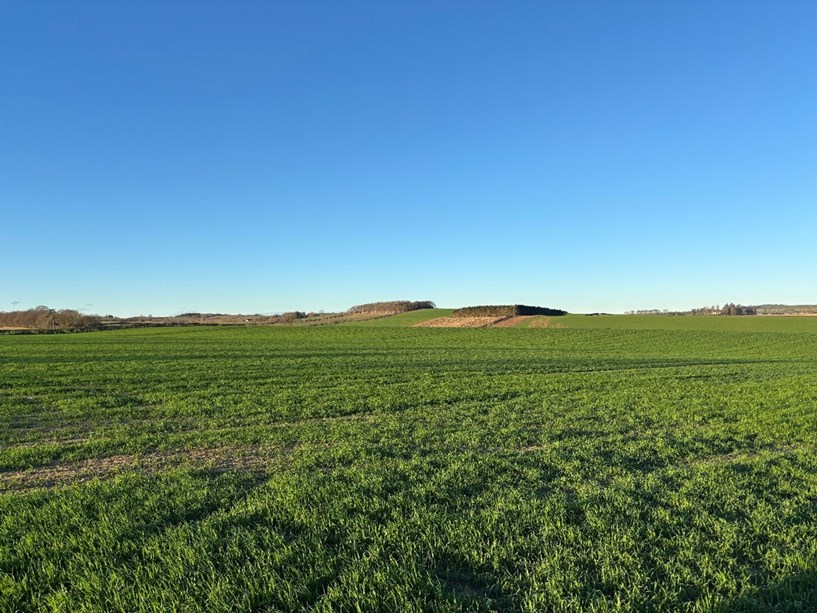
Our regular round up of the issues affecting crops around Scotland, summarises how crops are developing and what weather and other issues are affecting them. The update provides information on the progress with key field work activities as well as news on the pest, weed and disease problems being noted in crops. The health issues being seen in crops are a key part of the topical update and lets growers and agronomists adjust management practices appropriately.
31 December 2025
General Comments
Farmers will be content with the condition of autumn sown crops as the year closes out. Light disease pressure in forward barleys is reported and the majority of wheats are clean of disease with the exception of isolated infections of yellow rust reported in crops on eastern coastal fringes. Oilseed rape crops are well rooted and show potential once again for 2026. Fieldwork opportunities through December were limited with high rainfall reported particularly across the south west od Scotland. Farmers are adapting to and considering their options under the new Enhanced Greening Scheme and similarly planning spring cropping intentions particularly in light of the adverse trading conditions Spring Barley presented through 2025.
Regional Comments
CAITHNESS
Concerns continue in the area with regard to the malting barley job and also a reduction in gluten free oats contracts. However, some growers are optimistic of future improvements. Enhanced greening is gaining more traction as more producers are realising it may well affect them in 2026. General feedback has been positive in terms of how they are going to meet their own greening requirements. The recent mild spell has seen ground condition improve after a wet November. Winter crop continues to look in very good fettle. Fodder stocks appear to be good with an abundance of feed barley and especially straw available in the area.
MORAY
After a rain soaked November, the last month of the year has brought drier and, of late, milder weather. Autumn sown cereals are looking good with both wheat and barley looking quite lush. There is a fair amount of rynchosporium to be found in winter barley crops although it should succumb to a sharp frost should we get one. Winter wheat crops are about 2 leaves emerged and look clean. Winter oilseed rape crops seem to have grown away from earlier pigeon damage.
ABERDEENSHIRE
Winter crops are looking well as we reach the festive period, despite a blast of cold and snowy weather at the end of November and a week or two of wet weather. December has been trying its best to increase the annual rainfall figure for 2025! Some early winter ploughing has been undertaken, but most are allowing catch crops or unintentional cover crops of barley to grow in the stubbles at present. The warm weather this year and early hairst has fairly shown the potential of catch crops to many. This could make a few growers consider more green cover/catch crops for their EFA next year as the changes will allow them to be grazed off by livestock in the autumn instead of waiting until 1st January.
BANFF & BUCHAN
The end of the year sees everything now very wet, a complete contrast from just a couple of months ago. Any frosty mornings are greeted with a flurry of tractors and ploughs and farmers try to make headway into land work. Winter crops on the whole look well although barleys are yellowing in places. The last of the sprayers have been put away as some growers have eventually managed to get fungicides and graminicides applied. Crop planning sees extra head scratching this winter with reduced malting barley contract tonnages, poor price prospects, combined with the introduction of enhanced greening. Some growers have changed rotation, others reduced cropping areas while others are determined to ride out the storm. Despite the challenges faces the arable sector at the moment, it is amazing how once the days start stretching, enthusiasm for the year ahead grows as we start to approach spring. Hopefully 2026 sees a return to better prices and of course mother nature does her bit in terms of growing season and harvest weather and quality.
FIFE
In the main field work has stopped due to rain and very wet soil conditions. Christmas vegetables are still being lifted, with loads of carrots convoying into Kettle Produce alongside parsnips and sprouts. Winter wheat and barley crops are looking yellow from water-logged roots; there are low levels of septoria in the wheat and mildew in the barleys. WOSR is looking well with strong canopies and little pigeon damage.
ANGUS
Weather has been fairly damp but mild over the last few weeks with not much in the way of field work taking place but most are up to date anyway and mostly not in any hurry to get winter ploughing done. Crops continue to grow slowly, and a cold spell would be welcome to check any pest and disease activity.
PERTHSHIRE
A bit of winter ploughing took place on some of the heavier land earlier in the autumn, but recent wet weather has put pay to any further progress for now. Crops have gone into the winter in a good position being well advances with good root structures in place. A few are planning to graze lambs on the more forward cereal crops if the ground dries or freezes up a bit.
LOTHIANS
November saw rainfall across the region average just over 100mm, with less to the east (e.g Dunbar 72mm) and more to the west (e.g Penicuik 138mm). December rainfall so far has seen an even distribution of between 50-70mm. (to 18th December). There is potential therefore that we’ll see another 4 inches total for the month of December on top of the 4 inches received through November. Water has indeed started ponding where field capacity has now been exceeded. Crops do not appear to be adversely affected in general by the wetter conditions and there’s little need to access fields for agronomic reasons. Rather more, time is being allocated to ditch maintenance, hedging and manure handling. All crops will enter 2026 in promising condition.
BORDERS
The wet weather has brought an end to all field work and sprayers have been “put to bed” for the winter. There have been a couple of morning frost, but in general temperatures have been above average for the time of year. There are some very proud crop growths which may encourage an increase in grazing of cereals. Some leaf yellowing has appeared in winter barley due to the wet conditions and foliar disease is more apparent across all crops. Mildew and rhychosporium in barley, septoria and yellow rust (towards the coast) in wheat and light leaf spot in oilseed rape.
It’s good to see well established crops across the Borders, but this in turn could result in more disease pressure in the 2026 growing season.
STRANRAER
As predicted the lack of rainfall through the Spring and Summer months is catching up on us in the Southwest. January until end of August saw 50% of the 5year average annual rainfall fall. The remaining 50% has fallen over the last 4 months and is on track to achieve the 5-year average rainfall. This has taken its toll on winter crops, and it will be into the New Year before an assessment can be made on areas which will not make it through the winter. This has also had an impact on the Autumn spray routines with very few opportunities to get onto fields due to the wind and rain.
Posted by SRUC on 06/01/2026
