

Crop updates: 27 March 2026
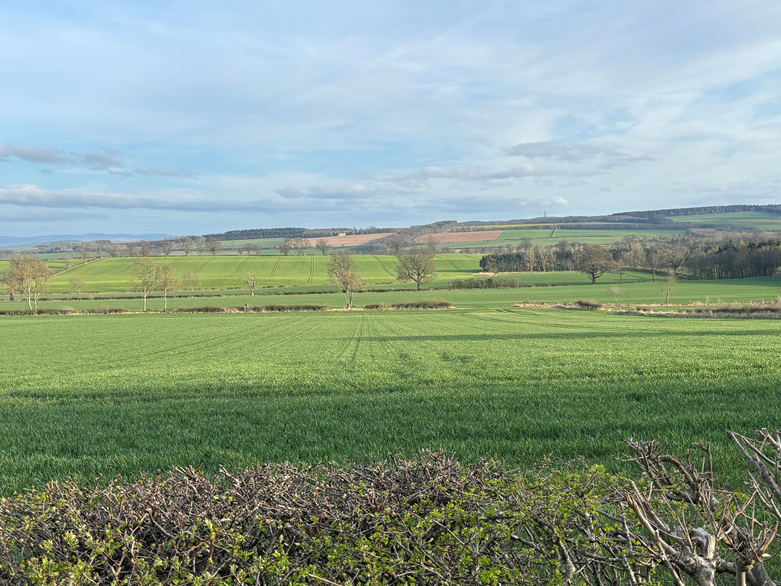
Our regular round up of the issues affecting crops around Scotland, summarises how crops are developing and what weather and other issues are affecting them. The update provides information on the progress with key field work activities as well as news on the pest, weed and disease problems being noted in crops. The health issues being seen in crops are a key part of the topical update and lets growers and agronomists adjust management practices appropriately.
27 March 2026
General Comments
Winter crops are very variable; there are cereal crops still at GS23 with little sign of disease to WB and WW crops around GS30 with septoria in wheat and rhynchosporium visible in winter barley. More rain; cold temperatures and some snow showers are not helping matters. Disease levels in winter barley are starting to pick up, with reports of rhynchosporium levels ticking upwards. Some reports of septoria in wheat as would be expected his time of year, but very little in the way of other diseases. Oilseed rape is approaching wellie boot stage. The wet weather will be suiting slugs so keep an eye out for damage.
Regional Comments
CAITHNESS
Unfortunately, fuel availability continues to be the bug bear for farmers in the area. Whilst fuel is being delivered it is generally being rationed, where an order of 5000 litres gets you a delivery of 2500 litres. That said spring sowing is underway across the area with reasonably good conditions. Some winter crops showing the effects of the very wet January and February, but the warmer temperatures witnessed last week in the area have certainly improved things. Fodder stocks as well as feed barley continue to be tight in the area.
BANFF & BUCHAN
The dry weather has continued, and good progress has been made with spring sowing over the past week. Many growers are starting around the same date as last year, something that seemed extremely unlikely a month ago. While soils are now drying up, they do remain cold, and warmth to go along with the sunshine would be welcome to help get things growing. Winter barleys are still somewhat on the pale side as crops try to take hold of nitrogen with Manganese also an issue. The wet January and February means Rhynchosporium can also be found in some crops although many are fast approaching T1. Wheats remain reasonably clean and oilseed rapes are now stretching and just about ready for their stem extension fungicide. Livestock farmers are grateful for the dry spell although grass growth remains slow.
KINCARDINESHIRE
A good spell of drying weather has seen field work get going in the area. Spring barley and oats are being sown with the last of the dung spreading and ploughing also taking place. Winter oilseed rape has enjoyed the milder temperatures and is growing well. Many crops are well into stem extension. Light leaf spot can be found in some crops. Winter barley is growing well with some early sown crops around GS30. There are traces of Rhynchosporium and net blotch in some crops, and mildew in some crops nearer the coast. Winter wheat is at tillering stage and is responding to the warmer soil temps and recent fertiliser applied. There are crops with septoria in them but no sign of any yellow rust in the area. Grass is beginning to grow with many fields now having some fertiliser applied.
FIFE
The first fields of spring beans and spring barley have been sown in Fife over the past week. Making a fine seed bed is still a little tricky with wet areas still noticeable in many fields. Soil temperatures ranged from 6 – 9 degrees C across Fife last week. Oilseed rape has accelerated and green buds are visible from above and wellie boot sprays have been applied. Winter barleys are getting T0 applications where required, disease levels are low, but Netblotch and Rhynchosporium can be found. Winter wheat crops are still tillering but have now mostly had their first nitrogen applications. Some warm dry weather for the next few weeks would be welcome.
STIRLINGSHIRE
It has been another mixed bag of weather over the past fortnight in the Stirling area, with conditions varying from 15 degrees and sunny to almost 0 degrees accompanied by wind and rain. This has affected some crops, with the winter oil seed rape starting to purple around the leaf edges, likely due to the drop in temperature. Disease pressure is starting to build with Rhynchosporium showing in barley crops, septoria in winter wheats and some powdery mildew in oat crops. Most farmers have now got on with their first application of fertiliser, with some cereal crops starting to yellow up. Ploughing has continued throughout in preparation for spring crops.
LOTHIANS
The last fortnight has given us drying conditions after a brief wet interlude on the 12th-13th March. Fertilising and spraying days have been more frequent especially over the last week with sprayers thankful for the more settled conditions to catch up on T0’s in wheats and light leaf spot sprays in rape. Daytime temperatures are however markedly variable and night-time temperatures are still dropping significantly and although oilseed rape has really started growing away, cereal crops appear slow to pick up. Spring drilling is underway with consecutive dry days over the past week allowing a fair acreage to go in. Disease pressure is light with yellow rust hard to find and Rynchosporium more easily so in barleys.
BORDERS
Over the past fortnight, 28mm of rain has been recorded at our St Boswells rain gauge. Weather conditions have remained variable, but generally favourable for fieldwork, allowing spring drilling to commence in many areas across the region. Nitrogen applications are now clearly showing, with cereal crops responding well and moving into GS30, with node now detectable. Crops are generally clean, with good colour and well tillered. Oilseed Rape continue to progress with buds now emerging and some crops at yellow bud, light leaf spot spray are being applied. Growers are now making plans to apply T0 fungicide and growth regulator on wheat. A continued period of settled weather would be welcomed to maintain momentum with sowing, fertiliser and spray programmes.
LANARKSHIRE
The weather remains variable in Lanarkshire. Rain and snow continue to fill the forecast, but a recent dry weekend allowed for many to spread slurry, fertiliser and FYM. A small number of farms have also managed to begin ploughing fields in preparation for spring cropping. Soil temperatures are beginning to rise and are reported to be around 6-8°C, with signs that grass is growing across the region. There have been a few reports of winter crops failing in the district, with the effected fields now ear marked for spring cropping.
Posted by SRUC on 09/04/2026
